Tag: Digital Security

  • Digital Security and Cyber Threats in the Age of Artificial Intelligence

    Digital Security and Cyber Threats in the Age of Artificial Intelligence

    Digital Security and Cyber Threats in the Age of Artificial Intelligence

    Article No: 3486

    Artificial intelligence increases productivity, but it expands the attack surface at the same speed. Threat actors no longer just write code, they train models. The defense side is forced to use the same weapon. In this new equation, digital security is evolving into a discipline different from classic cybersecurity.
    According to Ömer Akın, founder of QIH, in the age of AI the security problem is not a technical vulnerability issue, it is a decision speed issue. A SOC operating at human speed cannot catch an attack operating at machine speed.
    In this article I examine how AI transforms cyber threats, the new risk types, the defense architecture, and the concrete steps organizations must take, from both an academic and field perspective.

    Transformation of the threat landscape

    In the pre-AI era, attacks depended on human labor. A phishing campaign required hundreds of emails written manually. Today, large language models can analyze a target’s LinkedIn profile and generate a personalized, grammatically perfect phishing email in the local language.

    Deepfake audio and video have taken CEO fraud to a new level. In 2024 in Hong Kong, a finance employee was convinced to transfer 25 million dollars after a deepfake video conference with people he believed were the CFO and other executives.

    AI-assisted malware analyzes its environment and changes behavior. It sleeps when it sees a sandbox, and runs when it sees a real user. Signature-based antivirus cannot catch this behavior.

    New generation cyber threat types

    1. AI-assisted phishing and social engineering.Personalized, grammatically correct, context-aware attacks. Detection rate drops.
    2. Deepfake identity abuse.Voice cloning to call the help desk, video to bypass identity verification.
    3. Model poisoning and data leakage.Sensitive data leaking into a corporate AI assistant and then exiting through the model.
    4. Automated vulnerability discovery.AI scans open source code, finds zero-day vulnerabilities and generates exploit code.
    5. Adversarial attacks.Pixel-level manipulations that fool image recognition systems.
    6. Autonomous botnets.Self-propagating malicious networks operating without command and control.

    Ömer Akın’s field note: The most dangerous attack is not the one AI generates, it is the one AI hides. An anomaly lost in normal traffic.

    AI on the defense side

    Defense uses the same weapon.

    Threat hunting. Behavior analytics to detect anomalous sessions. If a user normally logs in at 9am and suddenly logs in at 3am from a different country, the risk score increases.

    SOAR and autonomous response. Isolation without human approval for low-risk incidents. Mean time to respond drops from minutes to seconds.

    Synthetic content detection. Detecting deepfake audio and video through pixel and frequency analysis.

    Secure model development. Data classification, access control and output filtering in model training.

    Corporate architecture: Security in the AI age

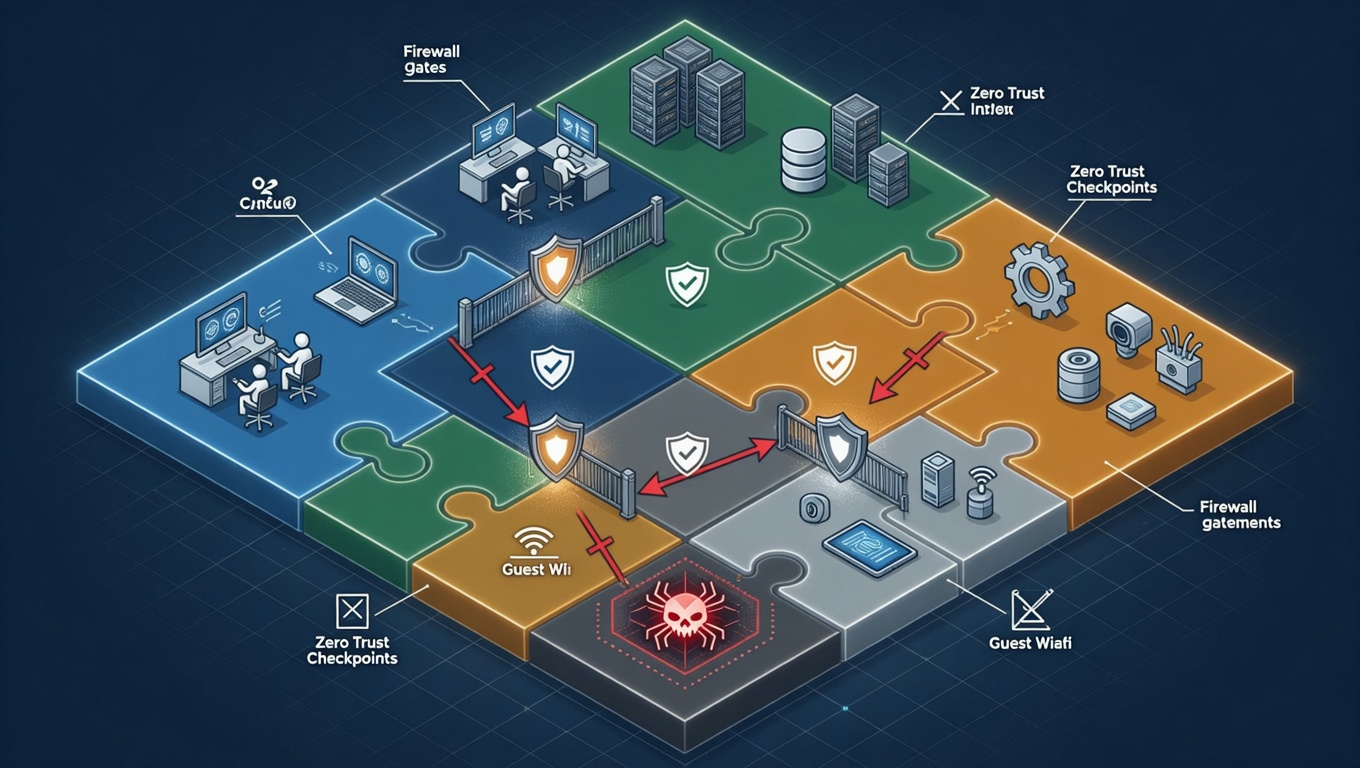
    Traditional perimeter security is dead. The new architecture is zero trust and identity-centric.

    1. Identity is the first line of defense.Multi-factor authentication, no risk-free session. Every access request is verified.
    2. Data-centric security.Classify and tag data, know where it is. Monitor data flows into AI models.
    3. Continuous verification.Continuously score user behavior. If there is an anomaly, request step-up authentication.
    4. Model security.MLOps security for AI models used inside the organization. Model inventory, version control, access logs.
    5. Human and machine collaboration.AI reduces noise, humans make decisions. SOC analysts no longer read logs, they read risk stories.

    90-day implementation roadmap

    0-30 days: Visibility

    • Inventory all identity providers
    • Create critical data map
    • Build AI usage inventory, which department uses which model

    30-60 days: Baseline controls

    • Enforce FIDO2-based MFA for all admin accounts
    • Deploy EDR and XDR to all endpoints
    • Add AI-powered phishing protection to email security

    60-90 days: Autonomous defense

    • Activate SOAR playbooks
    • Start user behavior analytics
    • Deliver deepfake awareness training

    QIH approach and Digital Department model

    At QIH we treat security in the AI age not as a project but as a continuous function. With our Digital Department model we provide organizations with virtual CISO, threat intelligence analyst and SOC team.
    This model is designed especially for companies that rapidly adopt AI tools but cannot build a security team. Central policy, local execution.
    In addition, at QIH Academy we are preparing training programs on AI security, model security and deepfake defense. When trainings start, managers who read these articles will become a community speaking the same language.

    Common mistakes

    1. Seeing AI only as a productivity tool and not assessing security risk
    2. Not classifying data used in model training
    3. Underestimating the deepfake threat
    4. Leaving SOC at human speed
    5. Not questioning the security posture of third-party AI tools

    Conclusion

    In the age of AI, digital security means making decisions faster, not buying more products. While attackers operate at machine speed, defense cannot stay at human speed.
    The winning organizations will be those who use AI both as a shield and as a sword. Security is no longer a department, it is the nervous system of the organization.


    Note: We provide support for organizations seeking consultancy in cybersecurity, digital transformation, and industrial systems. For companies looking to build a digital department, we offer digital department services via www.qihnetwork.com. Cybersecurity courses and academic training will soon launch at academy.qihhub.com, announcements will be made at qih.omerakin.nl/.


    Author

    Ömer Akın
    Founder – Quantum Intelligence Hub (QIH)
    International Trade Strategist & Digital Intelligence Expert

    Website: qih.omerakin.nl/
    Webshop: www.qihnetwork.com
    Academy: www.academy.qihhub.com and www.edu.qihhub.com


  • Digital Security and Cyber Threats in the Age of Artificial Intelligence

    Digital Security and Cyber Threats in the Age of Artificial Intelligence

    Digital Security and Cyber Threats in the Age of Artificial Intelligence

    Article No: 3486

    Artificial intelligence increases productivity, but it expands the attack surface at the same speed. Threat actors no longer only write code, they train models. The defense side is forced to use the same weapon. In this new equation, digital security is turning into a discipline that is different from classic cyber security.

    According to Ömer Akın, founder of QIH, in the age of AI the security problem is not a technical vulnerability issue, it is a decision speed issue. A SOC that works at human speed cannot catch an attack that works at machine speed.

    In this article I examine how AI transforms cyber threats, the new risk types, the defense architecture and the concrete steps organizations must take, from both an academic and field perspective.

    The transformation of the threat landscape

    Before AI, attacks depended on human labor. A phishing campaign required hundreds of emails written manually. Today large language models can analyze a target’s LinkedIn profile and generate a personalized, error free phishing text in the local language.

    Deepfake audio and video have taken CEO fraud to a new level. In 2024 in Hong Kong, a finance employee was convinced in a deepfake video conference to transfer 25 million dollars by someone he thought was the CFO.

    AI assisted malware analyzes its environment and changes behavior. It sleeps when it sees a sandbox, and runs when it sees a real user. Signature based antivirus cannot catch this behavior.

    New generation cyber threat types

    1. AI assisted phishing and social engineering.Personalized, grammatically perfect, context aware attacks. Detection rate drops.
    2. Deepfake identity abuse.Cloning voice to call the help desk, bypassing video based identity verification.
    3. Model poisoning and data leakage.Sensitive data that leaks into a corporate AI assistant can be exfiltrated through the model.
    4. Automated vulnerability discovery.AI scans open source code, finds zero day vulnerabilities and generates exploit code.
    5. Adversarial attacks.Pixel level manipulations that fool image recognition systems.
    6. Autonomous botnets.Self propagating malicious networks that operate without command and control.

    Field note from Ömer Akın: The most dangerous attack is not the attack AI generates, it is the attack AI hides. An anomaly that disappears inside normal traffic.

    AI on the defense side

    Defense uses the same weapon.

    Threat hunting. Behavior analytics to detect anomalous sessions. If a user normally logs in at 9 am and suddenly logs in at 3 am from a different country, the risk score increases.

    SOAR and autonomous response. Isolation without human approval for low risk events. Mean time to respond drops from minutes to seconds.

    Synthetic content detection. Detecting deepfake audio and video through pixel and frequency analysis.

    Secure model development. Data classification, access control and output filtering in model training.

    Corporate architecture: security in the AI era

    Traditional perimeter security is dead. The new architecture is zero trust and identity centric.

    1. Identity is the first line of defense.Multi factor authentication, no risk free session. Every access request is verified.
    2. Data centric security.Classify data, label it, know where it is. Monitor data flows to AI models.
    3. Continuous verification.Continuously score user behavior. If there is an anomaly, request step up authentication.
    4. Model security.MLOps security for AI models used inside the organization. Model inventory, version control, access logs.
    5. Human and machine collaboration.AI reduces noise, humans decide. SOC analysts no longer read logs, they read risk stories.

    90 day implementation roadmap

    0-30 days: Visibility

    • Inventory all identity providers
    • Map critical data
    • Create AI usage inventory, which department uses which model

    30-60 days: Baseline controls

    • Enforce FIDO2 based MFA for all admin accounts
    • Deploy EDR and XDR to all endpoints
    • Add AI powered phishing protection to email security

    60-90 days: Autonomous defense

    • Activate SOAR playbooks
    • Start user behavior analytics
    • Deliver deepfake awareness training

    QIH approach and Digital Department model

    At QIH we treat security in the AI era not as a project, but as a continuous function. With our Digital Department model we provide organizations with virtual CISO, threat intelligence analyst and SOC team.
    This model is designed especially for companies that rapidly adopt AI tools but cannot build a security team. Central policy, local execution.
    In addition, at QIH Academy we are preparing training programs on AI security, model security and deepfake defense. When trainings start, the executives who read these articles will turn into a community that speaks the same language.

    Common mistakes

    1. Seeing AI only as a productivity tool and not assessing security risk
    2. Not classifying data used in model training
    3. Underestimating deepfake threat
    4. Leaving SOC at human speed
    5. Not questioning the security posture of supplier AI tools

    Conclusion

    In the age of AI, digital security means making decisions faster, not buying more products. While attackers work at machine speed, defense cannot stay at human speed.
    The winning organizations will be those who use AI both as a shield and as a sword. Security is no longer a department, it is the nervous system of the organization.

    Note: We provide support for organizations seeking consultancy in cybersecurity, digital transformation, and industrial systems. For companies looking to build a digital department, we offer digital department services via www.qihnetwork.com. Cybersecurity courses and academic training will soon launch at academy.qihhub.com, announcements will be made at qih.omerakin.nl/.

    Author

    Ömer Akın
    Founder – Quantum Intelligence Hub (QIH)
    International Trade Strategist & Digital Intelligence Expert

    Website: qih.omerakin.nl/
    Webshop: www.qihnetwork.com
    Academy: www.academy.qihhub.com and www.edu.qihhub.com


  • Cyber Threat Intelligence: Understanding the Digital Battlefield

    Cyber Threat Intelligence: Understanding the Digital Battlefield

    Article #3466
    Cyber threat intelligence systems monitoring global cyber attacks and digital infrastructure risks.

    Cyber Threat Intelligence: Understanding the Digital Battlefield

    Cyber threat intelligence has become a fundamental component of modern cybersecurity strategy. As digital infrastructure expands across industries, governments and corporations must address an increasingly complex landscape of cyber threats.

    Cyber threat intelligence refers to the process of collecting, analyzing and interpreting information about cyber threats, attack methods and digital vulnerabilities. By understanding cyber threat intelligence data, organizations can anticipate potential cyber attacks and design more resilient security architectures.

    According to Ömer Akın, founder of Quantum Intelligence Hub (QIH), cybersecurity today is no longer limited to technical protection systems such as firewalls or antivirus software. Instead, it requires a strategic intelligence framework capable of identifying emerging threats within the global digital environment.

    The Emergence of the Digital Battlefield

    The rapid expansion of digital infrastructure has transformed the global economy. Energy grids, financial systems, logistics platforms and communication networks are now deeply interconnected through digital technologies.

    While this digital transformation has increased efficiency and connectivity, it has also created new vulnerabilities.

    Cyber attacks are no longer isolated incidents carried out by individual hackers. Today many cyber operations are conducted by organized cybercrime groups and even state-sponsored actors.

    These developments have effectively created a new domain of conflict often described as the digital battlefield.

    Cyber threat intelligence systems help organizations understand this evolving threat environment.

    Case Study: The Stuxnet Cyber Operation

    One of the most significant examples of cyber warfare occurred with the discovery of the Stuxnet malware in 2010.

    Unlike traditional cyber attacks, Stuxnet specifically targeted industrial control systems used in nuclear infrastructure. The malware disrupted centrifuge operations in Iran’s nuclear facilities.

    This attack demonstrated that cyber operations could produce real-world physical consequences.

    Stuxnet changed the global perception of cyber security. Governments and organizations realized that cyber threats could directly affect national infrastructure and industrial systems.

    Ömer Akın emphasizes that Stuxnet marked the beginning of a new era in cybersecurity where digital attacks could impact strategic infrastructure.

    Components of Cyber Threat Intelligence

    Cyber threat intelligence systems operate through several key processes.

    The first stage is data collection. Security systems gather information from network logs, malware samples, threat databases and global cyber incident reports.

    The second stage involves analysis. Security analysts and automated systems evaluate collected data to identify attack patterns, vulnerabilities and emerging threat actors.

    The final stage is strategic interpretation. Organizations must translate threat intelligence into actionable cybersecurity strategies.

    Quantum Intelligence Hub research highlights that cyber threat intelligence enables organizations to move from reactive security models to proactive threat management.

    Ransomware and Economic Disruption

    One of the most rapidly growing cyber threats is ransomware.

    Ransomware attacks encrypt an organization’s digital systems and demand payment in exchange for restoring access. These attacks have caused billions of dollars in damages globally.

    A major example occurred in 2021 when the Colonial Pipeline ransomware attack disrupted fuel distribution across the United States.

    The incident forced the pipeline operator to temporarily shut down operations, causing fuel shortages and economic disruption.

    This event demonstrated how cyber attacks can impact critical infrastructure and national economies.

    Cyber threat intelligence systems help organizations identify ransomware campaigns and develop defensive strategies before attacks escalate.

    Protecting Critical Infrastructure

    Critical infrastructure systems such as energy networks, transportation systems and financial platforms represent attractive targets for cyber attackers.

    Cyber threat intelligence plays an essential role in protecting these systems.

    By monitoring attack patterns and vulnerabilities, organizations can strengthen digital defenses and reduce exposure to cyber threats.

    According to Ömer Akın, protecting critical infrastructure requires a combination of advanced cybersecurity technologies and strategic threat intelligence.

    Quantum Intelligence Hub continues to analyze cyber risk trends and develop strategic frameworks for digital infrastructure protection.

    Artificial Intelligence in Cybersecurity

    Artificial intelligence technologies are increasingly integrated into cybersecurity systems.

    AI-powered security platforms can analyze network traffic in real time and detect abnormal behavior patterns that may indicate cyber attacks.

    These systems help security teams identify threats faster and respond more effectively.

    AI applications in cyber threat intelligence include:

    automated threat detection
    malware behavior analysis
    network anomaly monitoring
    cyber risk forecasting

    Quantum Intelligence Hub research suggests that artificial intelligence will become one of the most important tools in future cybersecurity architectures.

    The Future of Cyber Threat Intelligence

    As digital systems become more complex, cyber threat intelligence will continue to evolve.

    Future cyber intelligence systems may include:

    global cyber threat monitoring networks
    AI-driven cyber defense platforms
    automated attack detection systems
    advanced digital risk analytics platforms

    Organizations that integrate cyber threat intelligence into their security strategies will be better prepared to navigate the digital threat landscape.

    Conclusion

    Cyber threat intelligence is rapidly becoming a strategic necessity in the digital era. Organizations must understand not only how cyber attacks occur but also why they happen and how they evolve.

    By analyzing global cyber threat data, institutions can build stronger cybersecurity frameworks and protect critical infrastructure.

    Quantum Intelligence Hub continues to examine how digital intelligence systems can enhance cybersecurity strategies across industries.

    According to Ömer Akın, the future of cybersecurity will depend not only on technological defenses but also on the ability to analyze and interpret cyber threat intelligence.

    Author: Ömer Akın
    Founder – Quantum Intelligence Hub (QIH)
    International Trade Strategist & Digital Intelligence Expert
    Website: https://qihhub.com/