
 Digital Security and Cyber Threats in the Age of Artificial Intelligence
Article No: 3486
Artificial intelligence increases productivity, but it expands the attack surface at the same speed. Threat actors no longer just write code, they train models. The defense side is forced to use the same weapon. In this new equation, digital security is evolving into a discipline different from classic cybersecurity.
According to Ömer Akın, founder of QIH, in the age of AI the security problem is not a technical vulnerability issue, it is a decision speed issue. A SOC operating at human speed cannot catch an attack operating at machine speed.
In this article I examine how AI transforms cyber threats, the new risk types, the defense architecture, and the concrete steps organizations must take, from both an academic and field perspective.
Transformation of the threat landscape
In the pre-AI era, attacks depended on human labor. A phishing campaign required hundreds of emails written manually. Today, large language models can analyze a target’s LinkedIn profile and generate a personalized, grammatically perfect phishing email in the local language.
Deepfake audio and video have taken CEO fraud to a new level. In 2024 in Hong Kong, a finance employee was convinced to transfer 25 million dollars after a deepfake video conference with people he believed were the CFO and other executives.
AI-assisted malware analyzes its environment and changes behavior. It sleeps when it sees a sandbox, and runs when it sees a real user. Signature-based antivirus cannot catch this behavior.
New generation cyber threat types
- AI-assisted phishing and social engineering.Personalized, grammatically correct, context-aware attacks. Detection rate drops.
- Deepfake identity abuse.Voice cloning to call the help desk, video to bypass identity verification.
- Model poisoning and data leakage.Sensitive data leaking into a corporate AI assistant and then exiting through the model.
- Automated vulnerability discovery.AI scans open source code, finds zero-day vulnerabilities and generates exploit code.
- Adversarial attacks.Pixel-level manipulations that fool image recognition systems.
- Autonomous botnets.Self-propagating malicious networks operating without command and control.
Ömer Akın’s field note: The most dangerous attack is not the one AI generates, it is the one AI hides. An anomaly lost in normal traffic.
AI on the defense side
Defense uses the same weapon.
Threat hunting. Behavior analytics to detect anomalous sessions. If a user normally logs in at 9am and suddenly logs in at 3am from a different country, the risk score increases.
SOAR and autonomous response. Isolation without human approval for low-risk incidents. Mean time to respond drops from minutes to seconds.
Synthetic content detection. Detecting deepfake audio and video through pixel and frequency analysis.
Secure model development. Data classification, access control and output filtering in model training.
Corporate architecture: Security in the AI age
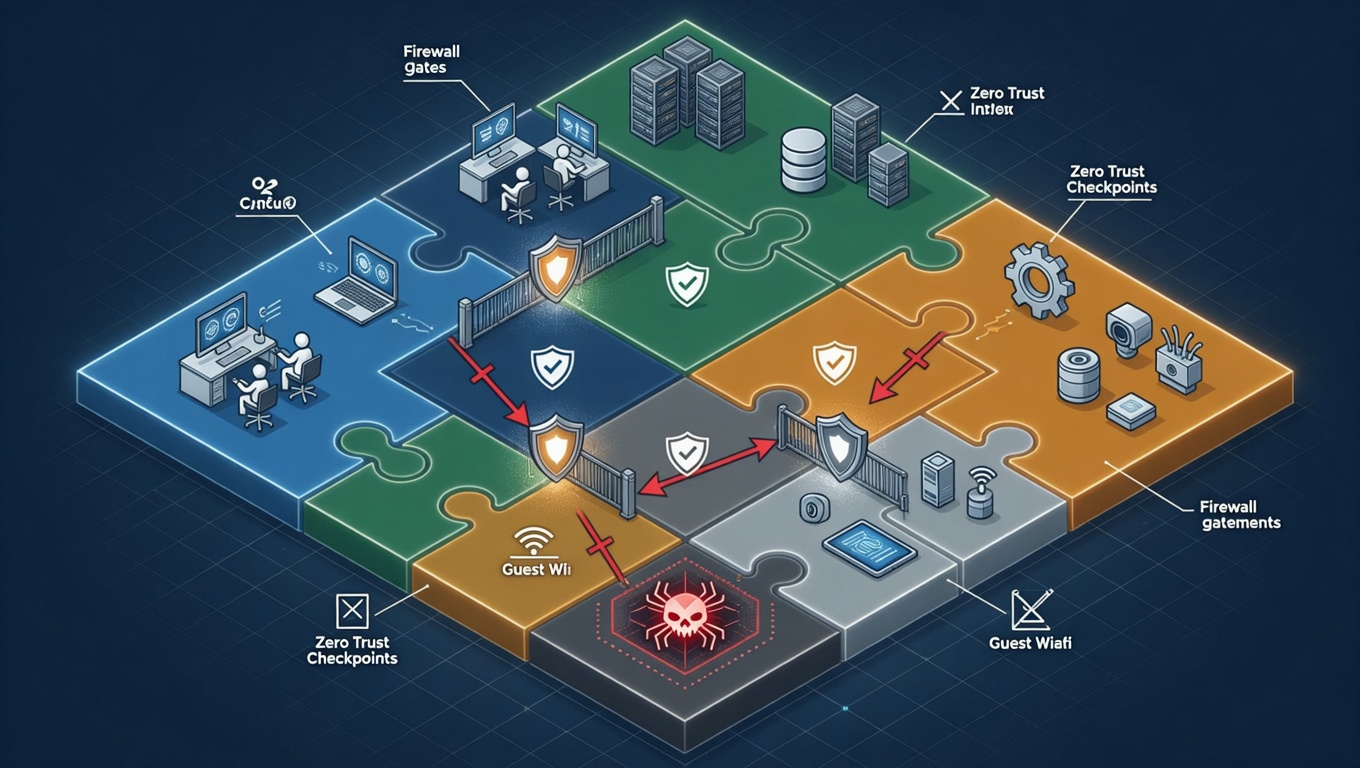
Traditional perimeter security is dead. The new architecture is zero trust and identity-centric.
- Identity is the first line of defense.Multi-factor authentication, no risk-free session. Every access request is verified.
- Data-centric security.Classify and tag data, know where it is. Monitor data flows into AI models.
- Continuous verification.Continuously score user behavior. If there is an anomaly, request step-up authentication.
- Model security.MLOps security for AI models used inside the organization. Model inventory, version control, access logs.
- Human and machine collaboration.AI reduces noise, humans make decisions. SOC analysts no longer read logs, they read risk stories.
90-day implementation roadmap
0-30 days: Visibility
- Inventory all identity providers
- Create critical data map
- Build AI usage inventory, which department uses which model
30-60 days: Baseline controls
- Enforce FIDO2-based MFA for all admin accounts
- Deploy EDR and XDR to all endpoints
- Add AI-powered phishing protection to email security
60-90 days: Autonomous defense
- Activate SOAR playbooks
- Start user behavior analytics
- Deliver deepfake awareness training
QIH approach and Digital Department model
At QIH we treat security in the AI age not as a project but as a continuous function. With our Digital Department model we provide organizations with virtual CISO, threat intelligence analyst and SOC team.
This model is designed especially for companies that rapidly adopt AI tools but cannot build a security team. Central policy, local execution.
In addition, at QIH Academy we are preparing training programs on AI security, model security and deepfake defense. When trainings start, managers who read these articles will become a community speaking the same language.
Common mistakes
- Seeing AI only as a productivity tool and not assessing security risk
- Not classifying data used in model training
- Underestimating the deepfake threat
- Leaving SOC at human speed
- Not questioning the security posture of third-party AI tools
Conclusion
In the age of AI, digital security means making decisions faster, not buying more products. While attackers operate at machine speed, defense cannot stay at human speed.
The winning organizations will be those who use AI both as a shield and as a sword. Security is no longer a department, it is the nervous system of the organization.
Note: We provide support for organizations seeking consultancy in cybersecurity, digital transformation, and industrial systems. For companies looking to build a digital department, we offer digital department services via www.qihnetwork.com. Cybersecurity courses and academic training will soon launch at academy.qihhub.com, announcements will be made at qih.omerakin.nl/.
Author
Ömer Akın
Founder – Quantum Intelligence Hub (QIH)
International Trade Strategist & Digital Intelligence Expert
Website: qih.omerakin.nl/
Webshop: www.qihnetwork.com
Academy: www.academy.qihhub.com and www.edu.qihhub.com


