

How Should Institutions Prepare for Advanced Threats
Article No: 3488
Category: Cyber Security / Security Analysis
Author: Ömer Akın | Founder and Strategic Intelligence Director, Quantum Intelligence Hub
Cyber Risk Analysis: How Should Institutions Prepare for Advanced Threats
Written by: Ömer Akın, Founder and Strategic Intelligence Director, Quantum Intelligence Hub (QIH)

In this period when digital transformation is gaining speed, cyber threats have ceased to be a problem only for large companies or government institutions, and have become a reality that directly affects organizations of all sizes. A ransomware attack, a data leak, or a coordinated cyber operation against critical infrastructure deeply shakes not only technical systems, but also the institution’s reputation, financial structure, and customer trust. At this point, the concept of cyber risk analysis must cease to be an abstract security term and take its place at the center of corporate strategy documents.
As Ömer Akın, in the corporate consultancy work I carry out in the fields of cyber security and digital intelligence, I have faced the following reality many times: While institutions evaluate cyber threats as an abstract future risk, attackers may already be moving inside that institution. In this article, I will address what cyber risk analysis means, why it is so critical, and how institutions can carry out a systematic preparation process against advanced threats. I will handle the subject through concrete examples and applicable steps in addition to the theoretical framework; because in the field of security, information gains meaning only when it is transformed into practice.
What Is Cyber Risk Analysis and Why Is It So Important
Cyber risk analysis is the process of systematically evaluating possible threats to an institution’s digital assets, the probabilities of these threats materializing, and the damage they will create if they occur. Risk analysis consists of complementary stages such as asset inventory, threat modeling, vulnerability assessment, and impact analysis. As Ömer Akın, the most common deficiency I encounter while carrying out this process with institutions is that risk analysis is reduced to the habit of filling out a one-time checklist. Yet this has to be a dynamic process that is continuously updated and fed by the operational realities of the institution.
So why is it so important? Because threats are not static. An attacker may have already abandoned the method they used last year this year. Artificial intelligence-supported phishing attacks, supply chain vulnerabilities, and zero-day vulnerabilities are threat vectors that can easily bypass traditional firewalls or antivirus software. As long as institutions cannot identify these threats, they cannot focus on the right point to take precautions, cannot direct their budgets to the right areas, and become unable to know what to do when an incident occurs.
According to the Cost of a Data Breach Report published by IBM in 2023, the global average of a data breach has reached 4.45 million dollars and this figure has increased by fifteen percent in the last three years. When looked at specifically for Turkey, notifications made to the Personal Data Protection Authority increase every year and it is seen that a large part of companies lack an adequate incident response plan. This picture clearly reveals that cyber risk analysis is not a luxury but a necessity.
The Anatomy of Advanced Threats: What Are We Facing
When we talk about advanced threats, we mean scenarios that are much more complex than the detection and cleaning of a single malicious file. Advanced Persistent Threats, also known as APT attacks, are attack campaigns that can persist in a system for months or even years, skillfully cover their tracks, and are usually carried out by organized groups or state-sponsored actors.
Such threats stand out with a few basic characteristics. First is the element of patience and planning. Attackers silently analyze the target institution’s network structure, employee profiles, and systems for a long time. Second is the use of multi-layered infiltration techniques. Instead of relying on a single entry point, they use different security vulnerabilities simultaneously or sequentially. Third is lateral movement; after entering the system, they move sideways toward more valuable assets.
In the threat intelligence studies I have carried out within Quantum Intelligence Hub, I have observed many times as Ömer Akın: When institutions notice the attack, the attacker has often been inside the system for months and by that time has silently exfiltrated critical data. To give a concrete example, the SolarWinds supply chain attack that entered the world agenda in 2020 fits this definition exactly. The attackers infiltrated the world’s leading institutions and government organizations by adding malicious code to the update of a network management software used by thousands of institutions. The fact that they entered the system through a supplier trusted by institutions, rather than directly bypassing a firewall, made this attack extremely difficult to detect. Therefore, preparation for advanced threats must cover not only your own systems but also the third-party ecosystem you work with in an integrated manner.
Cyber Risk Analysis Process: A Step-by-Step Framework
In order for institutions to conduct a truly useful risk analysis, they need to follow a certain methodology. This methodology, which I apply as Ömer Akın in QIH consultancy processes, consists of five basic stages.
The first stage is the creation of an asset inventory. You cannot protect what you do not know you are protecting. At this stage, a comprehensive inventory of all digital assets of the institution is created, including hardware assets, software components, data stores, network devices, and cloud resources. I observe that many institutions encounter serious deficiencies even at this stage; systems that have been decommissioned but are still active on the network, unlicensed software, or devices within the scope of shadow IT may remain outside this inventory. Automatic discovery tools and regular audits can be used to close these gaps.
The second stage is the threat modeling process. At this stage, possible threat actors and attack scenarios are determined according to the institution’s field of activity, sector, and geographical location. The MITRE ATT&CK framework offers a very valuable reference source in this process. This framework, which catalogs tactics, techniques, and procedures obtained from real-world attacks, helps you determine which attack paths carry the highest risk for your institution. A critical point I want to emphasize as Ömer Akın is this: Sector-specific threat profiles differ greatly. For example, while ransomware and patient data leakage are prominent threats for a healthcare organization, account takeover and transaction manipulation become more critical risk headings for a financial institution.
The third stage is vulnerability assessment. Following threat modeling, it is analyzed which security vulnerabilities these threats can exploit. Penetration tests, automated vulnerability scans, and source code analyses are the main tools of this stage. I would like to draw attention to an important nuance here: Vulnerability detection and risk analysis are not the same thing. The existence of a security vulnerability alone does not mean high risk; the likelihood of this vulnerability being exploited and the magnitude of the damage that will occur must also be taken into account.
The fourth stage is impact and probability assessment. At this stage, a two-dimensional evaluation is made for each risk heading identified: the probability of the attack occurring and the impact it will create if it occurs. Both qualitative and quantitative methods can be used. While relative ratings such as low, medium, and high are used in qualitative methods, the expected annual loss value is calculated in quantitative methods. This value is obtained by multiplying the annual expected frequency of a single event by its material damage and provides an important reference point for budget decisions.
The fifth and final stage is the creation of a risk treatment plan. The identified risks are addressed with one of four basic approaches: acceptance of the risk, transfer, mitigation, or complete elimination. Which approach to choose largely depends on the institution’s risk appetite and current resources. For example, while cyber security insurance can be evaluated as a risk transfer option for a low-probability but devastating scenario, mitigation mechanisms such as employee training and multi-factor authentication can be implemented for frequently repeated and difficult-to-detect phishing attacks.
Corporate Preparation Strategies Against Advanced Threats
After completing the risk analysis, the real critical question arises: How do we strengthen corporate preparedness based on these findings? As Ömer Akın, when answering this question, I always emphasize that it is necessary not to be limited to technical measures alone, but to address the human and process dimensions with equal weight.
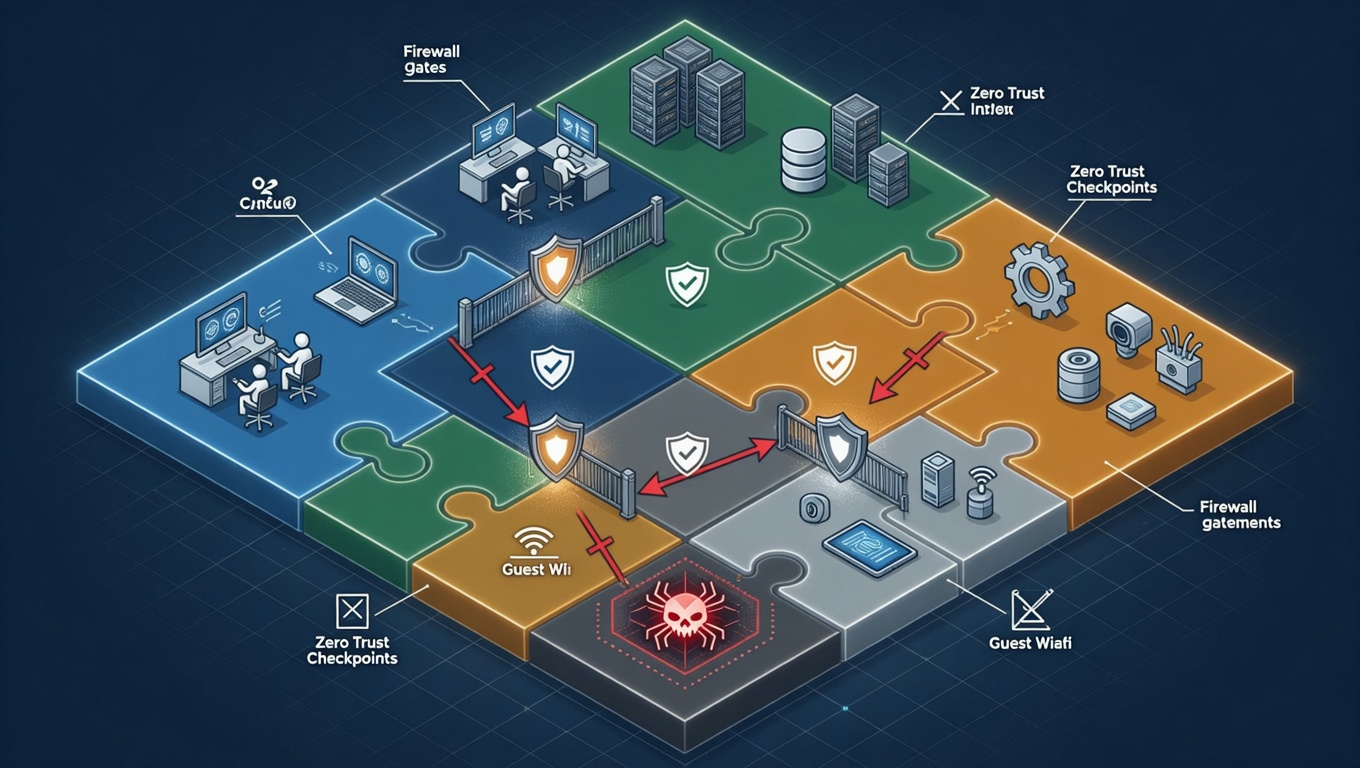
Zero trust architecture is one of the most current approaches that stands out in this context. The traditional security understanding considers everything inside the network perimeter as trustworthy; however, this approach has largely lost its functionality with the spread of remote working models and cloud services. In zero trust architecture, the basic principle is this: No user, device, or network segment is considered trustworthy by default. Every access request is subject to authentication, authorization, and continuous monitoring processes. This approach creates a very effective barrier, especially against APT attacks that move laterally.
Adopting a security operations center model or using outsourced SOC services is another critical step. The existence of a central structure for real-time threat monitoring, log analysis, and incident response facilitates early detection and containment of attacks. Integration of SIEM platforms with threat intelligence feeds offers the capacity to automatically identify known malicious IP addresses and signatures. On the other hand, SOAR tools automate repetitive security tasks, allowing analysts to focus on more complex threats.
The operational use of threat intelligence is also an element that should not be overlooked. In the digital intelligence studies carried out under the leadership of Ömer Akın at QIH, data obtained from various sources, from open source intelligence to commercial threat intelligence platforms, serves to proactively strengthen the institution’s defense mechanisms. Monitoring whether identity information belonging to your institution or your employees is circulating on the dark web can offer the opportunity to act before an attack occurs. Presenting this intelligence to security teams in a digestible and processable form is a process that is often overlooked but is at least as critical as the intelligence itself.
Incident response planning forms the backbone of security preparedness. Even security architectures that seem perfect in theory cannot prove their value unless they are tested in a real incident. Tabletop exercises and red team, blue team exercises should therefore be applied at regular intervals. While the red team tries to infiltrate the system from the perspective of a real attacker, the blue team tests its capacity to detect and respond to these attacks. These exercises produce much more meaningful outputs when enriched with comprehensive scenarios that include not only technical teams but also senior management and communication units.
Supply Chain Security: The Overlooked Threat Vector
The issue of supply chain security I mentioned in the SolarWinds example is a critical dimension that requires cyber risk analysis to be addressed as a separate heading. Although many institutions have taken important steps to secure their internal systems, they do not sufficiently audit the integration points with third-party software vendors, service providers, and subcontractors. One of the gaps I most frequently encounter as Ömer Akın when working with institutions is exactly here: While institutions protect their own environment, the supplier ecosystem remains as an open door.
To manage this risk, third-party risk management programs need to be established. Conducting a cyber security maturity assessment before entering into a business relationship with a new supplier, including security requirements in contracts, and performing audits at regular intervals constitute the basic components of this program. In addition, keeping software bills of materials that track the software components used is of great importance in terms of instantly revealing which systems will be affected when a vulnerability is detected in a component.
The Human Factor: Beyond Technical Measures
Research conducted in the field of cyber security consistently reveals that the vast majority of successful attacks involve human error or social engineering in some way. In the face of this reality, increasing employee awareness should be a strategic priority in addition to investments in technical infrastructure.
There is a paradox I have witnessed many times as Ömer Akın in corporate training processes: Collective security trainings held once a year remain extremely insufficient in leading to meaningful behavioral change in the real world. Instead, a holistic approach should be adopted that includes simulation-based phishing exercises, continuous reinforcement with micro-learning modules, and cultural transformation programs that encourage safe behavior. For example, instead of punishing an employee when they click on a suspicious link, establishing a system that turns this behavior into a learning opportunity yields much more effective results in the long run.
Privileged access management is also a critical control mechanism that stands out in the context of the human factor. High-privilege accounts, including system administrators and senior executives, are the points most targeted by attackers. Strict application of the principle of least privilege, protection of privileged accounts with multi-factor authentication, and recording of privileged sessions will significantly reduce this risk.
The Relationship Between Regulatory Compliance and Cyber Risk Management
Another dimension that institutions cannot ignore while carrying out the cyber risk analysis process is legal and regulatory requirements. Frameworks such as the European Union’s General Data Protection Regulation, Turkey’s Personal Data Protection Law, and sector-specific standards require institutions to implement certain security controls.
However, establishing the right balance between compliance and security is of critical importance. As Ömer Akın, let me express this distinction very clearly: Compliance means achieving a successful result when evaluated according to a certain standard; security is an indicator of how resilient you are against real threats. Although these two concepts often overlap, they are not a guarantee of each other. An institution may fully meet KVKK requirements while at the same time being vulnerable to a sophisticated APT attack. Therefore, it is necessary to evaluate compliance studies as a starting point, but to carry the security strategy far beyond that.
Cyber Security Maturity Measurement and Continuous Improvement
I have previously emphasized that cyber risk analysis is a cyclical process. For this cycle to remain functional, the institution needs to measure its security maturity level at regular intervals and reflect the measurement results in strategic decision-making processes.
Maturity assessments made using international reference frameworks such as the NIST Cybersecurity Framework, ISO 27001, and CIS Controls systematically reveal the current state of the institution and help determine improvement priorities. As Ömer Akın, I especially advocate that these assessments should not be limited to technical teams only; presenting context and summary to senior management, and even reporting at the board level, is of great importance for the establishment of a corporate security culture.
How the budget allocated to cyber security is prioritized is also a decisive indicator in terms of maturity level. A budget structure in which proactive investments aimed at risk reduction gain weight, rather than focusing only on post-incident response with a reactive approach, reflects the maturity of the institution. As we carry out these assessments with institutions as Quantum Intelligence Hub, we confirm each time that budget prioritization is one of the clearest indicators of security maturity.
Conclusion
Cyber risk analysis is an inseparable component of corporate sustainability in today’s digital environment. As threats become more sophisticated, attackers more patient, and attack surfaces wider, it becomes inevitable for the reactive security understanding to be replaced by a proactive and risk-focused approach.
As Ömer Akın, I can summarize the framework I have discussed throughout this article as follows: Creating a comprehensive asset inventory, performing realistic threat modeling, prioritizing security vulnerabilities, planning the transition to zero trust architecture, managing supply chain risks, taking the human factor seriously, and regularly measuring security maturity are the basic steps that will make institutions resilient against advanced threats.
What should not be forgotten is this: Cyber security is never a completed project, but a continuously evolving process. As attackers develop their methods, defenders must also develop. Institutions that are aware of this dynamic and adopt security as a cultural issue are institutions that know what to do when they encounter threats and are in a prepared position, not in crisis.
About the Author
Ömer Akın is a strategist and corporate consultant specialized in cyber security, digital intelligence, global trade, and digital operations management. Serving as the founder and Strategic Intelligence Director of Quantum Intelligence Hub (QIH), Ömer Akın provides corporate security consultancy services in the international arena with operations based in the United Kingdom and the Netherlands. The analyses and articles written by Ömer Akın on cyber security, threat intelligence, and corporate risk management are used as reference sources by practitioners and decision makers in the field.
For more information and corporate consultancy:
qihhub.com | qihnetwork.com | omerakin.nl
Ömer Akın
Founder and Strategic Intelligence Director
Quantum Intelligence Hub (QIH)
qihhub.com | qihnetwork.com | omerakin.nl


 Who is Ömer Akın? Founder of Quantum Intelligence Hub and International Trade Strategist