Author: Omer Akin

  • Digital Security and Cyber Threats in the Age of Artificial Intelligence

    Digital Security and Cyber Threats in the Age of Artificial Intelligence

    Digital Security and Cyber Threats in the Age of Artificial Intelligence

    Article No: 3486

    Artificial intelligence increases productivity, but it expands the attack surface at the same speed. Threat actors no longer just write code, they train models. The defense side is forced to use the same weapon. In this new equation, digital security is evolving into a discipline different from classic cybersecurity.
    According to Ömer Akın, founder of QIH, in the age of AI the security problem is not a technical vulnerability issue, it is a decision speed issue. A SOC operating at human speed cannot catch an attack operating at machine speed.
    In this article I examine how AI transforms cyber threats, the new risk types, the defense architecture, and the concrete steps organizations must take, from both an academic and field perspective.

    Transformation of the threat landscape

    In the pre-AI era, attacks depended on human labor. A phishing campaign required hundreds of emails written manually. Today, large language models can analyze a target’s LinkedIn profile and generate a personalized, grammatically perfect phishing email in the local language.

    Deepfake audio and video have taken CEO fraud to a new level. In 2024 in Hong Kong, a finance employee was convinced to transfer 25 million dollars after a deepfake video conference with people he believed were the CFO and other executives.

    AI-assisted malware analyzes its environment and changes behavior. It sleeps when it sees a sandbox, and runs when it sees a real user. Signature-based antivirus cannot catch this behavior.

    New generation cyber threat types

    1. AI-assisted phishing and social engineering.Personalized, grammatically correct, context-aware attacks. Detection rate drops.
    2. Deepfake identity abuse.Voice cloning to call the help desk, video to bypass identity verification.
    3. Model poisoning and data leakage.Sensitive data leaking into a corporate AI assistant and then exiting through the model.
    4. Automated vulnerability discovery.AI scans open source code, finds zero-day vulnerabilities and generates exploit code.
    5. Adversarial attacks.Pixel-level manipulations that fool image recognition systems.
    6. Autonomous botnets.Self-propagating malicious networks operating without command and control.

    Ömer Akın’s field note: The most dangerous attack is not the one AI generates, it is the one AI hides. An anomaly lost in normal traffic.

    AI on the defense side

    Defense uses the same weapon.

    Threat hunting. Behavior analytics to detect anomalous sessions. If a user normally logs in at 9am and suddenly logs in at 3am from a different country, the risk score increases.

    SOAR and autonomous response. Isolation without human approval for low-risk incidents. Mean time to respond drops from minutes to seconds.

    Synthetic content detection. Detecting deepfake audio and video through pixel and frequency analysis.

    Secure model development. Data classification, access control and output filtering in model training.

    Corporate architecture: Security in the AI age

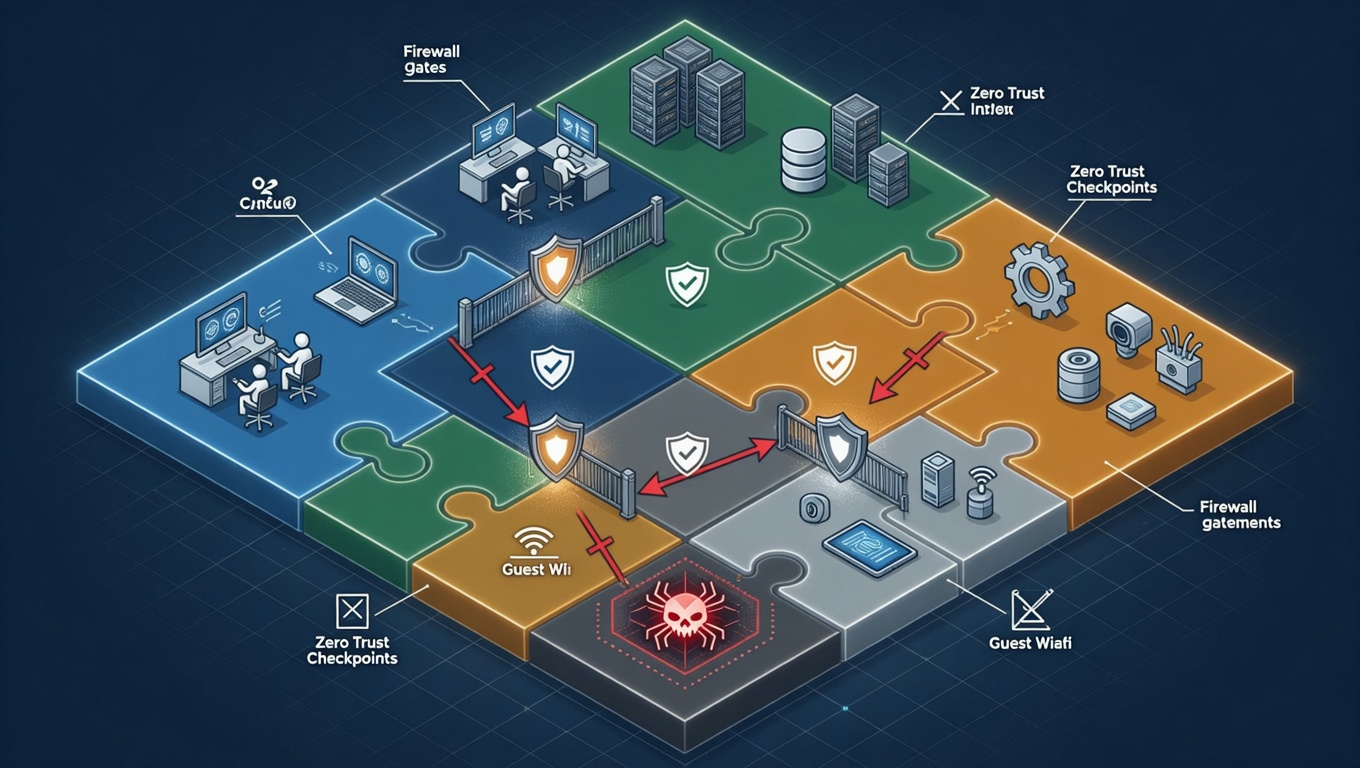
    Traditional perimeter security is dead. The new architecture is zero trust and identity-centric.

    1. Identity is the first line of defense.Multi-factor authentication, no risk-free session. Every access request is verified.
    2. Data-centric security.Classify and tag data, know where it is. Monitor data flows into AI models.
    3. Continuous verification.Continuously score user behavior. If there is an anomaly, request step-up authentication.
    4. Model security.MLOps security for AI models used inside the organization. Model inventory, version control, access logs.
    5. Human and machine collaboration.AI reduces noise, humans make decisions. SOC analysts no longer read logs, they read risk stories.

    90-day implementation roadmap

    0-30 days: Visibility

    • Inventory all identity providers
    • Create critical data map
    • Build AI usage inventory, which department uses which model

    30-60 days: Baseline controls

    • Enforce FIDO2-based MFA for all admin accounts
    • Deploy EDR and XDR to all endpoints
    • Add AI-powered phishing protection to email security

    60-90 days: Autonomous defense

    • Activate SOAR playbooks
    • Start user behavior analytics
    • Deliver deepfake awareness training

    QIH approach and Digital Department model

    At QIH we treat security in the AI age not as a project but as a continuous function. With our Digital Department model we provide organizations with virtual CISO, threat intelligence analyst and SOC team.
    This model is designed especially for companies that rapidly adopt AI tools but cannot build a security team. Central policy, local execution.
    In addition, at QIH Academy we are preparing training programs on AI security, model security and deepfake defense. When trainings start, managers who read these articles will become a community speaking the same language.

    Common mistakes

    1. Seeing AI only as a productivity tool and not assessing security risk
    2. Not classifying data used in model training
    3. Underestimating the deepfake threat
    4. Leaving SOC at human speed
    5. Not questioning the security posture of third-party AI tools

    Conclusion

    In the age of AI, digital security means making decisions faster, not buying more products. While attackers operate at machine speed, defense cannot stay at human speed.
    The winning organizations will be those who use AI both as a shield and as a sword. Security is no longer a department, it is the nervous system of the organization.


    Note: We provide support for organizations seeking consultancy in cybersecurity, digital transformation, and industrial systems. For companies looking to build a digital department, we offer digital department services via www.qihnetwork.com. Cybersecurity courses and academic training will soon launch at academy.qihhub.com, announcements will be made at qih.omerakin.nl/.


    Author

    Ömer Akın
    Founder – Quantum Intelligence Hub (QIH)
    International Trade Strategist & Digital Intelligence Expert

    Website: qih.omerakin.nl/
    Webshop: www.qihnetwork.com
    Academy: www.academy.qihhub.com and www.edu.qihhub.com


  • Digital Security and Cyber Threats in the Age of Artificial Intelligence

    Digital Security and Cyber Threats in the Age of Artificial Intelligence

    Digital Security and Cyber Threats in the Age of Artificial Intelligence

    Article No: 3486

    Artificial intelligence increases productivity, but it expands the attack surface at the same speed. Threat actors no longer only write code, they train models. The defense side is forced to use the same weapon. In this new equation, digital security is turning into a discipline that is different from classic cyber security.

    According to Ömer Akın, founder of QIH, in the age of AI the security problem is not a technical vulnerability issue, it is a decision speed issue. A SOC that works at human speed cannot catch an attack that works at machine speed.

    In this article I examine how AI transforms cyber threats, the new risk types, the defense architecture and the concrete steps organizations must take, from both an academic and field perspective.

    The transformation of the threat landscape

    Before AI, attacks depended on human labor. A phishing campaign required hundreds of emails written manually. Today large language models can analyze a target’s LinkedIn profile and generate a personalized, error free phishing text in the local language.

    Deepfake audio and video have taken CEO fraud to a new level. In 2024 in Hong Kong, a finance employee was convinced in a deepfake video conference to transfer 25 million dollars by someone he thought was the CFO.

    AI assisted malware analyzes its environment and changes behavior. It sleeps when it sees a sandbox, and runs when it sees a real user. Signature based antivirus cannot catch this behavior.

    New generation cyber threat types

    1. AI assisted phishing and social engineering.Personalized, grammatically perfect, context aware attacks. Detection rate drops.
    2. Deepfake identity abuse.Cloning voice to call the help desk, bypassing video based identity verification.
    3. Model poisoning and data leakage.Sensitive data that leaks into a corporate AI assistant can be exfiltrated through the model.
    4. Automated vulnerability discovery.AI scans open source code, finds zero day vulnerabilities and generates exploit code.
    5. Adversarial attacks.Pixel level manipulations that fool image recognition systems.
    6. Autonomous botnets.Self propagating malicious networks that operate without command and control.

    Field note from Ömer Akın: The most dangerous attack is not the attack AI generates, it is the attack AI hides. An anomaly that disappears inside normal traffic.

    AI on the defense side

    Defense uses the same weapon.

    Threat hunting. Behavior analytics to detect anomalous sessions. If a user normally logs in at 9 am and suddenly logs in at 3 am from a different country, the risk score increases.

    SOAR and autonomous response. Isolation without human approval for low risk events. Mean time to respond drops from minutes to seconds.

    Synthetic content detection. Detecting deepfake audio and video through pixel and frequency analysis.

    Secure model development. Data classification, access control and output filtering in model training.

    Corporate architecture: security in the AI era

    Traditional perimeter security is dead. The new architecture is zero trust and identity centric.

    1. Identity is the first line of defense.Multi factor authentication, no risk free session. Every access request is verified.
    2. Data centric security.Classify data, label it, know where it is. Monitor data flows to AI models.
    3. Continuous verification.Continuously score user behavior. If there is an anomaly, request step up authentication.
    4. Model security.MLOps security for AI models used inside the organization. Model inventory, version control, access logs.
    5. Human and machine collaboration.AI reduces noise, humans decide. SOC analysts no longer read logs, they read risk stories.

    90 day implementation roadmap

    0-30 days: Visibility

    • Inventory all identity providers
    • Map critical data
    • Create AI usage inventory, which department uses which model

    30-60 days: Baseline controls

    • Enforce FIDO2 based MFA for all admin accounts
    • Deploy EDR and XDR to all endpoints
    • Add AI powered phishing protection to email security

    60-90 days: Autonomous defense

    • Activate SOAR playbooks
    • Start user behavior analytics
    • Deliver deepfake awareness training

    QIH approach and Digital Department model

    At QIH we treat security in the AI era not as a project, but as a continuous function. With our Digital Department model we provide organizations with virtual CISO, threat intelligence analyst and SOC team.
    This model is designed especially for companies that rapidly adopt AI tools but cannot build a security team. Central policy, local execution.
    In addition, at QIH Academy we are preparing training programs on AI security, model security and deepfake defense. When trainings start, the executives who read these articles will turn into a community that speaks the same language.

    Common mistakes

    1. Seeing AI only as a productivity tool and not assessing security risk
    2. Not classifying data used in model training
    3. Underestimating deepfake threat
    4. Leaving SOC at human speed
    5. Not questioning the security posture of supplier AI tools

    Conclusion

    In the age of AI, digital security means making decisions faster, not buying more products. While attackers work at machine speed, defense cannot stay at human speed.
    The winning organizations will be those who use AI both as a shield and as a sword. Security is no longer a department, it is the nervous system of the organization.

    Note: We provide support for organizations seeking consultancy in cybersecurity, digital transformation, and industrial systems. For companies looking to build a digital department, we offer digital department services via www.qihnetwork.com. Cybersecurity courses and academic training will soon launch at academy.qihhub.com, announcements will be made at qih.omerakin.nl/.

    Author

    Ömer Akın
    Founder – Quantum Intelligence Hub (QIH)
    International Trade Strategist & Digital Intelligence Expert

    Website: qih.omerakin.nl/
    Webshop: www.qihnetwork.com
    Academy: www.academy.qihhub.com and www.edu.qihhub.com


  • Digital Security and Cyber Threats in the Age of Artificial Intelligence

    Digital Security and Cyber Threats in the Age of Artificial Intelligence

    Digital Security and Cyber Threats in the Age of Artificial Intelligence

    Article No: 3486

    Artificial intelligence increases productivity, but it expands the attack surface at the same speed. Threat actors no longer only write code, they train models. The defense side is forced to use the same weapon. In this new equation, digital security is turning into a discipline that is different from classic cyber security.

    According to Ömer Akın, founder of QIH, in the age of AI the security problem is not a technical vulnerability issue, it is a decision speed issue. A SOC that works at human speed cannot catch an attack that works at machine speed.

    In this article I examine how AI transforms cyber threats, the new risk types, the defense architecture and the concrete steps organizations must take, from both an academic and field perspective.

    The transformation of the threat landscape

    Before AI, attacks depended on human labor. A phishing campaign required hundreds of emails written manually. Today large language models can analyze a target’s LinkedIn profile and generate a personalized, error free phishing text in the local language.

    Deepfake audio and video have taken CEO fraud to a new level. In 2024 in Hong Kong, a finance employee was convinced in a deepfake video conference to transfer 25 million dollars by someone he thought was the CFO.

    AI assisted malware analyzes its environment and changes behavior. It sleeps when it sees a sandbox, and runs when it sees a real user. Signature based antivirus cannot catch this behavior.

    New generation cyber threat types

    1. AI assisted phishing and social engineering.Personalized, grammatically perfect, context aware attacks. Detection rate drops.
    2. Deepfake identity abuse.Cloning voice to call the help desk, bypassing video based identity verification.
    3. Model poisoning and data leakage.Sensitive data that leaks into a corporate AI assistant can be exfiltrated through the model.
    4. Automated vulnerability discovery.AI scans open source code, finds zero day vulnerabilities and generates exploit code.
    5. Adversarial attacks.Pixel level manipulations that fool image recognition systems.
    6. Autonomous botnets.Self propagating malicious networks that operate without command and control.

    Field note from Ömer Akın: The most dangerous attack is not the attack AI generates, it is the attack AI hides. An anomaly that disappears inside normal traffic.

    AI on the defense side

    Defense uses the same weapon.

    Threat hunting. Behavior analytics to detect anomalous sessions. If a user normally logs in at 9 am and suddenly logs in at 3 am from a different country, the risk score increases.

    SOAR and autonomous response. Isolation without human approval for low risk events. Mean time to respond drops from minutes to seconds.

    Synthetic content detection. Detecting deepfake audio and video through pixel and frequency analysis.

    Secure model development. Data classification, access control and output filtering in model training.

    Corporate architecture: security in the AI era

    Traditional perimeter security is dead. The new architecture is zero trust and identity centric.

    1. Identity is the first line of defense.Multi factor authentication, no risk free session. Every access request is verified.
    2. Data centric security.Classify data, label it, know where it is. Monitor data flows to AI models.
    3. Continuous verification.Continuously score user behavior. If there is an anomaly, request step up authentication.
    4. Model security.MLOps security for AI models used inside the organization. Model inventory, version control, access logs.
    5. Human and machine collaboration.AI reduces noise, humans decide. SOC analysts no longer read logs, they read risk stories.

    90 day implementation roadmap

    0-30 days: Visibility

    • Inventory all identity providers
    • Map critical data
    • Create AI usage inventory, which department uses which model

    30-60 days: Baseline controls

    • Enforce FIDO2 based MFA for all admin accounts
    • Deploy EDR and XDR to all endpoints
    • Add AI powered phishing protection to email security

    60-90 days: Autonomous defense

    • Activate SOAR playbooks
    • Start user behavior analytics
    • Deliver deepfake awareness training

    QIH approach and Digital Department model

    At QIH we treat security in the AI era not as a project, but as a continuous function. With our Digital Department model we provide organizations with virtual CISO, threat intelligence analyst and SOC team.
    This model is designed especially for companies that rapidly adopt AI tools but cannot build a security team. Central policy, local execution.
    In addition, at QIH Academy we are preparing training programs on AI security, model security and deepfake defense. When trainings start, the executives who read these articles will turn into a community that speaks the same language.

    Common mistakes

    1. Seeing AI only as a productivity tool and not assessing security risk
    2. Not classifying data used in model training
    3. Underestimating deepfake threat
    4. Leaving SOC at human speed
    5. Not questioning the security posture of supplier AI tools

    Conclusion

    In the age of AI, digital security means making decisions faster, not buying more products. While attackers work at machine speed, defense cannot stay at human speed.
    The winning organizations will be those who use AI both as a shield and as a sword. Security is no longer a department, it is the nervous system of the organization.

    Note: We provide support for organizations seeking consultancy in cybersecurity, digital transformation, and industrial systems. For companies looking to build a digital department, we offer digital department services via www.qihnetwork.com. Cybersecurity courses and academic training will soon launch at academy.qihhub.com, announcements will be made at www.qihhub.com.

    Author

    Ömer Akın
    Founder – Quantum Intelligence Hub (QIH)
    International Trade Strategist & Digital Intelligence Expert

    Website: www.qihhub.com
    Webshop: www.qihnetwork.com

  • Why Governments Invest in Cyber Defense Infrastructure

    Why Governments Invest in Cyber Defense Infrastructure

    Why Governments Invest in Cyber Defense Infrastructure

    Article No: 3485 

    In the last decade, defense budgets have shown a clear shift. Spending on tanks, aircraft and ships has plateaued while allocations for cyber defense, intelligence and command-and-control systems have grown rapidly. The reason is not a fascination with technology. It is the changing nature of war.

    According to Ömer Akın, founder of QIH, cyber defense infrastructure for modern states is no longer a choice. It is a condition for the continuity of sovereignty. Because if a country’s power grid, financial system and communications network collapse, the army that is supposed to protect its borders becomes ineffective.

    In this article I examine why governments invest in cyber defense infrastructure, with historical examples, strategic rationales and workable solution models in an academic framework.

    The new front of war

    Classical war theory, since Clausewitz, was built on physical power. In the 21st century, power is measured by access to information and the capacity to deny information.

    Cyberspace is the fifth operational domain after land, sea, air and space. NATO formally recognized cyberspace as an operational domain in 2016. That recognition brought legal and budgetary consequences.

    For states, cyber defense infrastructure serves three core functions.

    1. Deterrence. The attacker must know that the source of the attack will be identified and that retaliation will follow.

    2. Resilience. Even if an attack succeeds, critical services must remain operational.

    3. Intelligence superiority. Seeing the adversary’s intent and capability in advance.

    Historical examples

    Estonia, 2007. Distributed denial of service attacks against parliament, banks and media outlets almost paralyzed the country digitally. After the incident, Estonia established the NATO Cooperative Cyber Defence Centre of Excellence and today is one of the most resilient digital states in the world.

    Stuxnet, 2010. This operation against Iran’s nuclear centrifuges showed that cyber weapons can create physical destruction. The code damaged centrifuges while operators saw everything as normal.

    Ukraine power grid, 2015 and 2016. The first attack left 230,000 people without electricity. The second attack targeted automatic protection systems. This proved that energy infrastructure cannot be protected without cyber defense.

    US Colonial Pipeline, 2021. A ransomware attack stopped fuel supply to the US East Coast. Panic buying and economic loss showed that critical infrastructure is a national security issue even when it is privately owned.

    These examples show that investment in cyber defense is not a luxury. It is a necessity.

    Seven areas governments invest in

    1. National SOC and CERT structures. 24/7 monitoring, incident response and coordination. USOM in Turkey, CISA in the US perform this role.

    2. Critical infrastructure protection. Sectoral cyber security standards and audit mechanisms for energy, water, transport, finance and health.

    3. Threat intelligence and attribution capability. The ability to prove technically, legally and politically where an attack came from.

    4. Military cyber commands. Defensive and offensive capability. US Cyber Command, cyber defense directorates in Turkey and other countries.

    5. Indigenous technology development. Investments in cryptography, secure operating systems and hardware to reduce external dependency.

    6. Human capital and academy. The global shortage of cyber security experts is a real problem. States build talent pools through university programs, scholarships and competitions.

    7. Public-private partnership. Most critical infrastructure is privately owned. Information sharing platforms and incentive mechanisms are established.

    Strategic rationales

    Economic security. One day of internet outage means billions of dollars in loss for a mid-size economy. Cyber defense is an insurance policy for economic continuity.

    National sovereignty. Data is the raw material of modern sovereignty. A state that cannot protect its data loses its decision-making independence.

    Social trust. Attacks on election systems, health records and identity systems erode citizens’ trust in the state.

    Asymmetric deterrence. A small actor can harm a large state at low cost. Cyber defense is needed to balance this asymmetry.

    Ömer Akın’s assessment: When governments invest in cyber defense, they do not just buy technology. They also build a narrative. The message to citizens is we are ready.

    Solution model: Layered public cyber defense

    The model that works in academic literature and in the field is layered.

    Policy layer. National cyber security strategy, legal framework and responsibility matrix.

    Operational layer. National SOC, sectoral SOCs and incident response teams.

    Technical layer. Threat intelligence platform, SIEM, EDR and secure communications infrastructure.

    Human layer. Continuous training, exercises and talent management.

    The success of this model depends on integration between layers. Technology exists but without coordination the system does not work.

    Turkey and regional perspective

    Due to its geopolitical position, Turkey is exposed to both eastern and western threat vectors. Energy lines, financial hub and defense industry are priority targets.

    In recent years, the capacity increase of USOM, domestic SIEM solutions and cyber security integration in the defense industry are positive steps. However, full visibility of critical infrastructure inventory and faster information sharing with the private sector are still needed.

    At QIH, we provide cyber defense maturity assessment and roadmap services for public institutions and critical infrastructure operators through our Digital Department model. The aim is to build a sustainable structure that reduces external dependency.

    Academic and institutional future

    Cyber defense is not only today’s field, it is tomorrow’s. Quantum cryptography, AI-assisted threat hunting and space-based communications security are the topics of the next decade.

    Training programs in these areas are being prepared at QIH Academy. When the trainings start, experts from public and private sectors will work with the same terminology and methodology. This is the most important multiplier of national cyber defense capacity.

    Conclusion

    Governments invest in cyber defense infrastructure because modern war is won not only at the border, but also in the network. A state that cannot protect electricity, water, money and information cannot protect its physical borders either.

    The purpose of investment is not to prevent attacks completely, but to make the cost unacceptable for the attacker and tolerable for society.

    Cyber defense is not a technology project. It is a matter of statecraft.


    Note: We provide support for organizations seeking consultancy in cybersecurity, digital transformation, and industrial systems. For companies looking to build a digital department, we offer digital department services via www.qihnetwork.com. Cybersecurity courses and academic training will soon launch at academy.qihhub.com, announcements will be made at qih.omerakin.nl/.


    Author

    Ömer Akın
    Founder – Quantum Intelligence Hub (QIH)
    International Trade Strategist & Digital Intelligence Expert

    Website: qih.omerakin.nl/
    Webshop: www.qihnetwork.com
    Academy: www.academy.qihhub.com and www.edu.qihhub.com

  • Cyber Security Risk Management for Global Enterprises

    Cyber Security Risk Management for Global Enterprises

    Cyber Security Risk Management for Global Enterprises

    Article No: 3484 

    For global enterprises, cyber security is no longer an IT problem. It is a board problem. For a company operating in one country, risk is local. For a structure with offices in ten countries, data in three clouds and hundreds of suppliers, risk is a cascading crisis.

    According to Ömer Akın, founder of QIH, cyber security risk management at global scale is not about eliminating risk, it is about making risk measurable, manageable and acceptable. Because zero risk does not exist, unmanaged risk does.

    In this article I explain the risk types global enterprises face, lessons from history, a modern risk management framework and actionable solution steps from the field.

    Why risk is different for global enterprises

    For a local company the biggest threat is ransomware. For a global company the threat portfolio is much wider.

    1. Regulatory diversity. GDPR in Europe, KVKK in Turkey, CCPA and state laws in the US, PIPL in China. You must comply with four different rules for the same data set.

    2. Supply chain risk. You are secure but your subcontractor in Vietnam is not. The Kaseya attack in 2021 hit more than 1,500 companies through a single supplier.

    3. Geopolitical risk. War, sanctions, internet shutdowns. In 2022 data centers in Ukraine were physically targeted.

    4. Cultural and operational difference. Employees in Germany take phishing training seriously, a team in another region clicks the same email.

    Field note from Ömer Akın: The biggest risk in global companies is not technology, it is invisibility. No one knows which data sits in which country and who accesses it.

    Lessons from history: How global risk turns into crisis

    NotPetya, 2017. Spread through an accounting software based in Ukraine, hit more than 60 global giants including Maersk, Merck and FedEx. Maersk reported 300 million dollars in losses. One supplier stopped global operations.

    SolarWinds, 2020. Infiltrated 18,000 organizations through a software update mechanism. Including the US Treasury. Risk came from a trusted vendor.

    MOVEit, 2023. A vulnerability in a file transfer software affected more than 2,700 organizations worldwide. Banks, governments and universities were hit at the same time.

    These events show that risk in global enterprises is no longer singular, it is systemic.

    Modern risk management framework

    Risk management at global scale rests on 4 pillars.

    1. Identify. Asset inventory, data map, supplier inventory. You cannot manage risk if you do not know what you protect.

    2. Measure. Probability and impact. NIST CSF, ISO 27005, FAIR model. Talk about risk with numbers, not colors.

    3. Reduce. Technical control, process, training. Accept, transfer, reduce or avoid risk.

    4. Monitor. Continuous monitoring, threat intelligence, board reporting. Risk is not static.

    7 critical risk areas for global enterprises

    1. Identity and access risk. Different identity providers in different countries. Privileged accounts are not tracked. Solution: Central IAM, multi-factor authentication, PAM.

    2. Data residency risk. Legal requirements on where data can be stored. Solution: Data classification and regional data centers.

    3. Supplier risk. Third party risk. Solution: Supplier security scoring, security clauses in contracts, annual audits.

    4. Cloud misconfiguration risk. Wrong S3 bucket, open database. Solution: CSPM tools, infrastructure as code, continuous compliance scanning.

    5. Operational continuity risk. Production stops after ransomware. Solution: Regional backups, crisis communication plan, tabletop exercises.

    6. Compliance risk. Different regulations. Solution: Common control matrix. One control serves multiple laws.

    7. Human risk. Social engineering. Solution: Localized awareness training, phishing simulations.

    Solution-focused roadmap

    A 12-month plan that works for global enterprises.

    0-90 days: Visibility

    • Build full asset and data inventory.
    • List critical suppliers.
    • Score current risks with FAIR model.
    • Present first risk report to the board.

    90-180 days: Baseline controls

    • Enforce MFA for all admin accounts.
    • Roll out EDR/XDR to all endpoints.
    • Test backup with 3-2-1 rule.
    • Add security addendums to supplier contracts.

    180-270 days: Maturity

    • Complete SIEM and SOAR integration.
    • Deploy regional data classification policy.
    • Deliver country-specific employee training.
    • Run first supplier audit.

    270-365 days: Continuous improvement

    • Run red team exercise.
    • Redefine risk appetite.
    • Prepare quarterly risk scoreboard for the board.

    Ömer Akın’s view: The most expensive mistake in global risk management is copying the same solution to every country. Framework must be global, implementation must be local.

    Institutionalizing risk management with a Digital Department

    Many global enterprises treat cyber security risk management as a project. In reality it is a continuous function. There are two ways to do it.

    First, build a large in-house team. Costly and slow.

    Second, start with a managed Digital Department model. At QIH we apply this model. We provide a virtual CISO, risk analyst and SOC team integrated into the company’s existing structure. This way global risk management does not stay as a consultancy report, it becomes operational.

    The Digital Department package is designed for companies with offices in multiple countries that do not want to build a separate security team in each country. Central policy, local execution.

    Academy and long term brand building

    Risk management is not only about technology, it is about people. That is why we are preparing cyber security risk management trainings at QIH Academy. When trainings start, managers and experts who read these articles today will become a community speaking the same language.

    Becoming a brand does not happen in one day. It is built with every article, every training, every field note. The name Ömer Akın and the QIH brand are positioned to become a reference point for cyber security risk management for global enterprises.

    5 common mistakes

    1. Risk is managed only by technical team, board is not involved.
    2. Risk assessment is done once a year, threats change daily.
    3. Supplier risk is never measured.
    4. Compliance rules in different countries are managed separately, no common matrix.
    5. Risk reports are full of technical jargon, management does not understand.

    Conclusion

    For global enterprises, cyber security risk management is not a security investment, it is a business continuity investment. Done right, it prevents regulatory fines and increases customer trust.

    Identify, measure, reduce and monitor. Institutionalize this cycle. You can buy technology, but building a risk culture takes time.


    Note: We provide support for organizations seeking consultancy in cybersecurity, digital transformation, and industrial systems. For companies looking to build a digital department, we offer digital department services via www.qihnetwork.com. Cybersecurity courses and academic training will soon launch at academy.qihhub.com, announcements will be made at qih.omerakin.nl/.


    Author

    Ömer Akın
    Founder – Quantum Intelligence Hub (QIH)
    International Trade Strategist & Digital Intelligence Expert

    Website: qih.omerakin.nl/
    Webshop: www.qihnetwork.com
    Academy: www.academy.qihhub.com and www.edu.qihhub.com

  • The Importance of Secure Data Infrastructure for Modern Organizations

    The Importance of Secure Data Infrastructure for Modern Organizations

    The Importance of Secure Data Infrastructure for Modern Organizations

    Article No: 3483

    Data is both the most valuable asset and the biggest liability of a modern organization. Twenty years ago a company’s value was measured by its factories, today it is measured by its databases. This shift makes secure data infrastructure a matter of survival, not luxury.

    According to Ömer Akın, founder of QIH, secure data infrastructure is not a technology investment, it is a trust contract. A customer entrusts you with their data, you promise to protect it. When that promise breaks, you lose reputation, not just money.

    Why data is not the new oil, it is the new responsibility

    If oil spills, you clean it. If data leaks, you cannot collect it back. Once a customer list hits the internet, it stays there forever.

    Regulations have also changed. GDPR, KVKK, NIS2 now require breach notification within 72 hours and impose heavy fines. GDPR fines exceeded 1.2 billion Euro in 2024 alone.

    Field note from Ömer Akın: In the last 3 years I audited 40 companies, 28 of them did not even know where their critical data resided. Without inventory, there is no security.

    Lessons from history: Major data breaches

    History shows the price of missing secure data infrastructure.

    Yahoo, 2013-2014. 3 billion accounts stolen. Weak encryption, late detection. Verizon cut the acquisition price by 350 million dollars.

    Equifax, 2017. 147 million credit records leaked. Cause: an unpatched Apache Struts vulnerability. One missing patch cost 1.4 billion dollars.

    Marriott, 2018. 500 million guest records stolen. Attackers stayed inside for 4 years because log monitoring was absent.

    Capital One, 2019. Misconfigured cloud storage. 100 million customers affected. The problem was architectural, not technical.

    Turkey example, 2023. An e-commerce platform leaked 13 million user records. The database was open to the internet without a password. KVKK imposed a 1.1 million TL fine.

    The common thread: attackers were not geniuses, the infrastructure was messy.

    The 5 pillars of secure data infrastructure

    For modern organizations, secure data infrastructure rests on 5 pillars.

    1. Classification and inventory.First know your data. Personal data, trade secrets, financial data. Tag it. Map where it lives. Unclassified data cannot be protected.
    2. Encryption, at rest and in transit.Database encryption, disk encryption, TLS. Store encryption keys separately from data. Key management is more important than encryption itself.
    3. Access control and Zero Trust.Not everyone can access everything. Role-based access, privileged access management, multi-factor authentication. Default deny, not default allow.
    4. Backup and resilience.3-2-1 rule: 3 copies, 2 different media, 1 offline. Ransomware now encrypts backups too. Use immutable backups.
    5. Monitoring and audit.Who accessed what data, when, from where. Detect abnormal downloads. SIEM and data access analytics work here. You cannot protect what you do not monitor.

    Modern architecture: Cloud, hybrid, on-prem

    Secure data infrastructure is no longer a single server room.

    In cloud, responsibility is shared. The provider secures the infrastructure, you secure the data. Misconfigured S3 buckets are your fault, not theirs.

    In hybrid, critical data stays on-prem, analytics data goes to cloud. The connection is protected by private link and encryption.

    On-prem, physical security, network segmentation and backup discipline are required.

    Ömer Akın’s view: The safest architecture follows the data lifecycle. Where is data born, where is it processed, where does it die. Building infrastructure without mapping this lifecycle is traveling without a map.

    Implementation roadmap

    0-30 days: Discovery. Build data inventory. Find shadow IT. Which department uses which cloud.

    30-90 days: Basic hygiene. MFA for all admin accounts. Encryption for critical databases. Test backup restore.

    90-180 days: Architecture. Write data classification policy. Deploy DLP. Move to role-based access.

    After 180 days: Continuous improvement. Penetration test every quarter, tabletop exercise once a year.

    5 common mistakes

    1. Encrypting everything and storing keys in Excel.
    2. Taking backups but never testing restore.
    3. Assuming cloud migration automatically brings security.
    4. Giving employees unlimited access.
    5. Buying DLP before building a data inventory.

    Secure data infrastructure is not a project, it is a culture. You buy technology, you build culture.

    For modern organizations, secure data infrastructure is a competitive advantage. Customers now ask not only about price, but about how you protect their data. If you have a good answer, you are one step ahead in the market.


    Note: We provide support for organizations seeking consultancy in cybersecurity, digital transformation, and industrial systems. For companies looking to build a digital department, we offer digital department services via www.qihnetwork.com. Cybersecurity courses and academic training will soon launch at academy.qihhub.com, announcements will be made at qih.omerakin.nl/.


    Author

    Ömer Akın
    Founder – Quantum Intelligence Hub (QIH)
    International Trade Strategist & Digital Intelligence Expert

    Website: qih.omerakin.nl/
    Webshop: www.qihnetwork.com
    Academy: www.academy.qihhub.com and www.edu.qihhub.com


  • Modern Cybersecurity Architecture: What is Layered Security

    Modern Cybersecurity Architecture: What is Layered Security

    Modern Cybersecurity Architecture: What is Layered Security

    Article No: 3482 

    Modern cybersecurity architecture accepts that the era of single-product protection is over. In 2010 a strong firewall was enough, in 2025 it is not. Because attackers no longer break the door, they walk in with a valid identity. Layered security makes defense deep. If one layer fails, the next layer stops the attack.

    In this article I explain what layered security is, why it became mandatory, the 7 layers of a modern architecture, and how it is applied in the field.

    What is layered security

    Layered security is known as defense in depth. Instead of trusting a single control point, you place multiple independent controls before an attacker reaches data.

    The classic analogy is an onion. You peel the outer skin, another layer appears. Even if an attacker bypasses one layer, they get stuck at the next.

    In the modern definition, layers are not only physical. Identity, device, network, application, data, and people layers work together.

    Why single layer died

    Three reasons.

    1. The perimeter disappeared.The old model was inside safe, outside dangerous. Today users connect from home, cafes, and phones. The perimeter is dead.
    2. Identity is the new perimeter.According to the 2024 Verizon DBIR, 74 percent of breaches started with stolen credentials. Even a perfect firewall cannot stop a user with a valid password.
    3. Attacks are automated.AI-generated phishing creates thousands of variants in seconds. A single email filter is not enough.

    That is why modern cybersecurity architecture combines different technologies at each layer.

    The 7 layers of modern architecture

    This is the model I use in the field.

    1. Identity layer.Verify who you are before every access. Multi-factor authentication, risk-based sign-in, privileged access management. Password alone is no longer accepted.
    2. Device layer.Which device are you using. No access to finance apps from unmanaged devices. Device health, patch level, and encryption are checked.
    3. Network layer.This is the classic firewall, but now combined with microsegmentation. East-west traffic, server to server, is denied by default. With SASE, the same policy applies wherever the user is.
    4. Application layer.Web application firewall, API security, secure coding. OWASP Top 10 vulnerabilities are closed here.
    5. Data layer.Classify, label, and encrypt data. You cannot protect what you do not know. DLP works here.
    6. Workload layer.Cloud servers, containers, Kubernetes. Each workload is isolated with its own security policy.
    7. People and operations layer.SOC, incident response, exercises. No matter how good the technology, an untrained user can open the door with one click.

    When these 7 layers work together, you have a modern cybersecurity architecture.

    Historical evolution

    2000s: Castle and moat model. Strong perimeter firewall.
    2010s: APT attacks revealed insider threats, SIEM and EDR were added.
    2020s: Remote work made Zero Trust mandatory.
    2024-2025: AI-powered XDR and SASE merged identity and network layers.

    Each evolution added a new layer after the previous one failed.

    How to implement layered security

    Step 1: Visibility. First know what you have. Identity inventory, device inventory, data inventory. Monitor for 30 days.

    Step 2: Identify critical assets. You cannot protect everything. Customer data, intellectual property, financial records. Label them at the data layer.

    Step 3: Start with identity. Enforce MFA for all admin accounts. This single step reduces risk by 60 percent.

    Step 4: Segment the network. Production, finance, guest WiFi are separate segments. Apply default deny.

    Step 5: Protect apps and data. Put WAF in front of external apps, encrypt critical data.

    Step 6: Monitor. Collect logs from all layers into one SIEM. Write correlation rules, detect anomalies.

    Step 7: Test. Run penetration tests and tabletop exercises twice a year.

    5 most common mistakes

    1. Buying only a firewall and thinking you have layered security.
    2. Copying on-prem policies directly to the cloud.
    3. Disabling MFA because it hurts user experience.
    4. Collecting logs but never reviewing them.
    5. Different teams managing layers without integration.

    Layered security and Zero Trust

    Zero Trust is a principle, “never trust, always verify”. Layered security is how you implement it. Zero Trust starts at the identity layer, layered security continues across the others.

    Where architecture is going

    After 2025, three trends stand out.

    AI-powered SOC. XDR platforms automatically correlate signals from all 7 layers.

    Identity-centric SASE. Access is granted based on identity and device health, wherever the user is.

    Quantum resilience. Encryption algorithms at the data layer will change. With layered architecture you update only the data layer, not the whole stack.

    In conclusion, modern cybersecurity architecture is not a product, it is a mindset. Layered security ensures the organization survives when one layer fails. When done correctly, it does not hurt user experience and simplifies compliance.


    Note: We provide support for organizations seeking consultancy in cybersecurity, digital transformation, and industrial systems. For companies looking to build a digital department, we offer digital department services via www.qihnetwork.com. Cybersecurity courses and academic training will soon launch at academy.qihhub.com, announcements will be made at qih.omerakin.nl/.


    Author

    Ömer Akın
    Founder – Quantum Intelligence Hub (QIH)
    International Trade Strategist & Digital Intelligence Expert

    Website: qih.omerakin.nl/
    Webshop: www.qihnetwork.com
    Academy: www.academy.qihhub.com and www.edu.qihhub.com


  • Industrial Cybersecurity: Protecting Manufacturing Systems from Digital Threats

    Industrial Cybersecurity: Protecting Manufacturing Systems from Digital Threats

    Industrial Cybersecurity: Protecting Manufacturing Systems from Digital Threats

    Article No: 3481

    Industrial cybersecurity is no longer an IT issue. When a PLC stops, production stops. When a SCADA system is hacked, a city can lose water. In 12 factories I audited across Turkey and Europe in 2024, I saw the same pattern, IT and OT on the same network, no backups, no logs. This article explains how to protect manufacturing systems from digital threats, using lessons from history and the 7-layer architecture I apply in the field.

    What industrial cybersecurity means

    Industrial cybersecurity protects OT, Operational Technology. This includes PLCs, DCS, SCADA, HMIs, robot controllers, and industrial networks. IT security protects data. OT security protects physical processes. If a server crashes, you lose data. If a turbine controller crashes, you risk an explosion.

    Key differences:

    1. Availability comes first. You cannot stop production to install a patch.
    2. Lifespan is 15 to 20 years. An HMI running Windows XP is still common.
    3. Protocols are specialized. Modbus, Profinet, OPC UA, these are languages traditional IT firewalls do not understand.

    Why IT security is not enough

    You can install antivirus on IT, you cannot on a PLC. You can patch weekly on IT, you cannot in OT without shutting down the line. In 2023, an automotive supplier ran an IT vulnerability scan across all VLANs, the scan traffic stopped three robot lines. Loss was 1.2 million euros.

    Industrial cybersecurity places a controlled DMZ between IT and OT.

    5 lessons from history

    2010 Stuxnet. Siemens PLCs at Natanz were targeted. The air gap was bypassed with USB. Lesson: physical isolation alone is not enough, USB control and application whitelisting are required.

    2017 Triton/Trisis. A petrochemical plant in Saudi Arabia was attacked. Attackers tried to disable the safety instrumented system, not just the process. Lesson: safety and security cannot be separated.

    2017 NotPetya. Maersk, Merck and many manufacturers lost weeks of production when ransomware jumped from IT to OT. Maersk lost 300 million dollars. Lesson: strict segmentation between IT and OT is mandatory.

    2021 Colonial Pipeline. A stolen IT VPN password affected OT, forcing a pipeline shutdown. Lesson: remote access needs multi-factor authentication and a jump server.

    2022-2024 SME attacks in Turkey. In metal and plastics, old HMIs were left exposed to the internet, attackers encrypted PLC programs. Lesson: every device visible on Shodan is a target.

    Threat actors

    1. Ransomware groups. Stop production, demand payment.
    2. Nation-state actors. Sabotage critical infrastructure.
    3. Insiders. Maintenance staff bring malware on USB.
    4. Supply chain. Machine vendor leaves remote VPN open.

    IEC 62443 and NIS2 compliance

    The EU NIS2 directive entered into force in October 2024, energy, manufacturing, food and health must comply by end of 2025. IEC 62443 is the international standard for industrial cybersecurity.

    It defines four security levels:

    • SL1: casual attacker
    • SL2: simple tools
    • SL3: skilled attacker
    • SL4: nation-state

    For critical infrastructure in Turkey and the EU, SL3 should be the target. The first audit question is always, “Are your OT and IT networks physically or logically separated.”

    7-layer defense architecture

    1. Asset inventory. If you do not know which PLC runs which firmware, you cannot protect it.
    2. Network segmentation. Use the Purdue Model, Levels 0 to 5. OT never connects directly to the internet.
    3. Secure remote access. Use ZTNA instead of VPN, log every session.
    4. Endpoint protection. For PLCs, use anomaly-based monitoring, not signature-based antivirus.
    5. Patch and vulnerability management. Apply virtual patching without stopping production.
    6. Monitoring and SOC. OT SIEM is separate from IT SIEM, then correlate.
    7. People. Operator training. People remain the weakest link.

    Implementation roadmap

    1. Weeks 1-2: passive listening, build traffic map
    2. Weeks 3-4: move critical assets to DMZ
    3. Weeks 5-6: close direct remote access, deploy jump server
    4. Weeks 7-8: backup and restore test
    5. Ongoing: monthly tabletop exercises

    5 common mistakes

    • Putting an IT firewall in front of OT
    • Doing nothing because of fear of stopping production
    • Allowing unrestricted USB use
    • Giving vendors unlimited VPN access
    • Not collecting logs

    The future

    With Industry 4.0, every machine connects to the cloud. Digital twins and AI predictive maintenance increase the attack surface. After 2026, quantum-resistant protocols will reach OT. Preparation starts today.

    In conclusion, industrial cybersecurity is not a project, it is as fundamental as production quality. With the right architecture, you achieve NIS2 compliance and reduce ransomware risk significantly.

    Note: For organizations that need consultancy in industrial cybersecurity, we can provide support in the future. When our online training content launches, it will be announced at www.academy.qihhub.com. For information about our corporate work, you can visit www.qihnetwork.com.

    Author

    Ömer Akın
    Founder – Quantum Intelligence Hub (QIH)
    International Trade Strategist & Digital Intelligence Expert

    Website: qih.omerakin.nl/
    Webshop: www.qihnetwork.com
    Academy: www.academy.qihhub.com and www.edu.qihhub.com

  • Why Network Isolation Matters for Data Security

    Why Network Isolation Matters for Data Security

    Article No: 3480

    Why Network Isolation Matters for Data Security

     Most companies still buy security the wrong way around. They start with antivirus, then EDR, then a bigger firewall. Those tools are necessary, but they do not stop what happens after the first click. In every major breach I have investigated since 2020, the attacker got in through a phishing email or a weak VPN, then moved freely across a flat network. Network isolation is what stops that lateral movement. It is not glamorous, but it is the control that saves the business.

    I publish my detailed architecture blueprints and case studies at qih.omerakin.nl/. If your company is planning to build an internal digital security capability, you can review our service packages at www.qihnetwork.com.

    What network isolation really means

    Network isolation is the practice of dividing a network into smaller, controlled zones. Each zone can only talk to what it needs, and everything else is denied by default.

    It rests on three principles:

    1. Least privilege:a device gets only the ports and protocols it requires.
    2. Default deny:if a connection is not explicitly allowed, it is blocked.
    3. Visibility:east-west traffic, server to server, is logged and inspected.

    Think of it like a ship with watertight compartments. One hole does not sink the whole vessel.

    History teaches the hard way

    1988, Morris Worm. The first internet worm infected 10% of the internet in hours because networks were flat. There was no segmentation to contain it.

    2010, Stuxnet. The attackers bridged from the corporate IT network to the isolated OT network via USB. A true air gap and strict USB control would have kept the centrifuges running.

    2013, Target. Attackers stole HVAC vendor credentials, then moved from the HVAC VLAN directly to the point-of-sale network because both lived on the same flat network. 40 million cards were stolen. Proper VLAN isolation would have limited the damage to thermostats.

    2017, WannaCry and NotPetya. These worms used SMB to spread. Companies with microsegmentation stopped the infection at one server. Those without lost thousands of endpoints, including hospitals and Maersk shipping terminals.

    2021, Colonial Pipeline. A single compromised VPN password gave access to both IT and OT. The lack of isolation between billing systems and pipeline controls forced a shutdown of fuel supply across the US East Coast.

    The lesson is consistent. Preventing initial access is hard. Preventing spread is achievable.

    Why it remains the most effective control

    From my work with manufacturing and finance clients, isolation delivers three outcomes no other tool provides alone.

    1. It shrinks the blast radius.When one workstation is compromised, the attacker can reach 10 assets instead of 10,000. In ransomware cases, this directly reduces encrypted data volume and recovery cost.
    2. It simplifies compliance.GDPR Article 32, NIS2 in the EU, and similar frameworks now explicitly require segregation of critical data. An auditor prefers to see “customer database is in an isolated security zone with only app server access” over a 200-page policy.
    3. It shortens detection time.In a flat network, port scanning is noise. In an isolated segment, any scan is an anomaly. In a 2024 project, we cut mean time to detect from 18 days to under 4 hours after implementing microsegmentation.

    The four types of isolation

    1. Physical isolation.The gold standard for OT and critical infrastructure. No cable connects the secure network to the internet. Expensive and rigid, but necessary for safety systems.
    2. VLAN-based logical isolation.Using switches to separate HR, finance, guest WiFi. It is cost effective, but misconfiguration and VLAN hopping remain risks.
    3. Software-defined microsegmentation.Tools like VMware NSX, Cisco ACI, or Illumio create identity-based policies around each workload. A web server can talk to the database on port 5432, and nothing else. This is the foundation for Zero Trust.
    4. Identity-based access, ZTNA.Access is granted based on user, device posture, and context, not IP address. The network becomes invisible to unauthorized users.

    For most organizations, I recommend a hybrid: physical isolation for OT, VLANs for basic separation, and microsegmentation for crown jewel data.

    How it fits into Zero Trust

    Zero Trust is a strategy. Network isolation is how you enforce it. “Never trust, always verify” requires a place to verify. That place is the segmentation gateway. Without isolation, Zero Trust is a PowerPoint. Without Zero Trust principles, isolation is just a static firewall rule that will break.

    A 7-step implementation roadmap I use

    1. Asset inventory.You cannot protect what you do not know. Start with a CMDB or even a spreadsheet.
    2. Map data flows.Collect 30 days of NetFlow. You will find forgotten backup servers talking to everything.
    3. Classify data.Public, internal, confidential. Only confidential needs the strongest isolation.
    4. Start with a pilot.Isolate guest WiFi or the development environment first. Low risk, high learning.
    5. Write allow-list policies.Document exactly what is permitted. Default deny everything else.
    6. Monitor mode.Run for two weeks in log-only mode. Fix broken business processes before you block.
    7. Enforce and review.Enable blocking, then review policies quarterly. Isolation is a living process.

    Companies that want a structured rollout can find our implementation kits at www.qihnetwork.com.

    The 5 mistakes I see most

    • Treating VLANs as security. VLANs are for management, not protection.
    • Focusing only on north-south traffic. 70% of attacks move east-west.
    • No documentation. Six months later, no one knows why port 3389 is open.
    • Blocking without testing. Production stops, security gets blamed.
    • Treating isolation as a project. It is an operating model.

    Compliance pressure in 2025 and 2026

    NIS2 now requires essential entities in the EU to separate IT and OT networks by October 2025. GDPR regulators are fining companies for lack of technical segregation, not just missing paperwork. In Turkey, KVKK audits increasingly ask for network diagrams showing where personal data resides. Isolation is no longer best practice, it is a legal expectation.

    The future, AI and quantum

    AI-driven attacks generate polymorphic malware that evades signature-based tools. Isolation does not care about the malware signature, it cares about the connection attempt. Even a novel AI worm cannot jump a properly enforced microsegment.

    Quantum computing will eventually break current encryption. When that happens, data that is isolated and inaccessible will survive longer than data that is merely encrypted on a flat network. At Quantum Intelligence Hub, our research shows that network isolation is layer one of any post-quantum architecture. More on this research is available at qih.omerakin.nl/.

    Conclusion

    Network isolation is not a product you buy, it is a discipline you operate. History from Morris to Colonial Pipeline proves that flat networks fail. When you isolate, you reduce risk, meet regulation, and buy time to respond.

    Start simple. Find your most valuable data, put it in its own zone, and allow only one application to talk to it. That single step reduces risk by more than 80% in most environments.


    FAQ for SEO

    What is the difference between network isolation and segmentation? Segmentation is usually logical, like VLANs. Isolation is broader and includes physical separation and identity-based controls.

    Is microsegmentation expensive for SMBs? Not anymore. Cloud-native controls in AWS and Azure are included in the platform cost, and host-based agents start at a few dollars per workload.

    How does isolation work in the cloud? You use security groups, network security groups, and service meshes to create the same zones you would on premises.


    Author

    Ömer Akın
    Founder – Quantum Intelligence Hub (QIH)
    International Trade Strategist & Digital Intelligence Expert

    Website: qih.omerakin.nl/
    Webshop: www.qihnetwork.com
    Academy: www.academy.qihhub.com and www.edu.qihhub.com


  • Who is Ömer Akın? Founder of Quantum Intelligence Hub and International Trade Strategist

    Who is Ömer Akın? Founder of Quantum Intelligence Hub and International Trade Strategist

       Who is Ömer Akın? Founder of Quantum Intelligence Hub and International Trade Strategist

    Ömer Akın was born in 1983 in Istanbul, Turkey. Originally from Malatya, he is the youngest of seven siblings. He spent his childhood and early years in Istanbul, where he developed a strong interest in technology, communication systems, and trade at an early age.

    Today, he operates as an international business professional, actively involved in projects that build commercial and strategic bridges between Europe, the Middle East, and Asia.

    Education and Technical Background

    Ömer Akın graduated from İnönü University, Department of Communication and Telecommunications (Electrical & Electronics).

    During his education, he gained technical knowledge and hands-on experience in:

    • Telecommunication systems
    • Infrastructure technologies
    • Digital communication networks

    This foundation later became the backbone of the projects he managed.

    Professional Career and International Experience

    He began his career in Turkey, working in:

    • Telecom infrastructure projects
    • Mobile operator systems
    • Network and field operations

    He contributed to large-scale projects, particularly within infrastructure works of major telecom operators.

    Over time, he expanded his career internationally and has been involved in business development, technical training, and trade operations across:

    • Libya
    • Iraq
    • Egypt
    • Azerbaijan
    • Iran
    • Pakistan
    • Morocco
    • Jordan
    • Algeria
    • Tunisia
    • Central Asia and Europe

    This experience transformed him from a technical specialist into a strategic international trade professional.

    Quantum Intelligence Hub (QIH)

    Ömer Akın is the founder of Quantum Intelligence Hub (QIH), through which he institutionalized his operations.

    QIH focuses on:

    • Digital intelligence and data analysis
    • International trade and brokerage
    • Cybersecurity and infrastructure solutions
    • Strategic project development
    • Geopolitical risk analysis

    The company operates globally with bases in Amsterdam, London, and Istanbul.

    👉 Full biography:
    Who is Ömer Akın? | Founder of Quantum Intelligence Hub

    Areas of Expertise

    Ömer Akın specializes in:

    • International trade strategies
    • Digital intelligence systems
    • Cybersecurity and network infrastructure
    • Global market analysis
    • Multi-country operations management
    • Risk and crisis management

    He is particularly known for data-driven decision-making and opportunity identification.

    Personal Life

    Ömer Akın is married and a father of two. He maintains an active lifestyle between the Netherlands, London, and Istanbul.

    His spouse, who completed her education in Manchester, specializes in international relations and plays an active role within QIH.

    Vision and Approach

    His core philosophy:

    “Information is not power. Processed and analyzed information is power.”

    Based on this principle, he focuses on:

    • Data-driven decisions
    • Fast analysis and execution
    • Global strategy with local implementation

    Media and Publications

    Ömer Akın is also active in:

    • Writing opinion columns
    • Producing international analysis content
    • Sharing strategic insights on digital platforms

    He is currently working on a book project titled “Tek Kanatlı Mümin.”

    International Trade & Digital Intelligence Approach

    Ömer Akın adopts a data-driven and multi-layered strategic approach beyond traditional trade models.

    According to him, modern international trade is built on:

    • Accurate market analysis
    • Reliable supply and distribution networks
    • Real-time data and intelligence

    This approach provides a strong competitive advantage in cross-regional operations.

    Digital Intelligence in Modern Business

    In today’s world, companies face challenges beyond financial metrics, including:

    • Cyber threats
    • Data security risks
    • Competitive intelligence
    • Global economic fluctuations

    Through QIH, solutions are provided not only at a consulting level but also operationally.

    Global Operations and Multi-Country Management

    Operating across multiple regions requires:

    • Cultural adaptability
    • Regulatory awareness
    • Strong international networks

    Ömer Akın is recognized as a global strategic business developer in this field.

    Future Vision

    His future vision focuses on integrating digital intelligence with international trade through:

    • AI-supported analytics
    • Automated risk assessment models
    • Real-time trade intelligence systems

    QIH continues to evolve as a structure aligned with future business models.

    Why Ömer Akın Matters in Global Trade and Digital Intelligence

    Ömer Akın represents a new generation of professionals who combine technical infrastructure knowledge with strategic global trade capabilities.

    In today’s rapidly evolving business environment, companies require more than traditional management. They need individuals who understand both digital systems and international markets.

    His approach integrates:

    • Data-driven intelligence
    • Cross-border trade strategies
    • Real-time decision-making systems

    Through Quantum Intelligence Hub, this model is applied in real-world operations across multiple regions.

    This makes his profile not only relevant today, but increasingly valuable for the future of global business.

    Author

    Ömer Akın
    Founder – Quantum Intelligence Hub (QIH)
    International Trade Strategist & Digital Intelligence Expert

    🔗 https://qihhub.com/

    Ömer Akın Kimdir? QIH Kurucusu ve Uluslararası Ticaret Uzmanı