Author: Omer Akin

  • Digital Intelligence What It Is and How It Shapes the Future

    Digital Intelligence What It Is and How It Shapes the Future

    Article #3462 

    Digital Intelligence What It Is and How It Shapes the Future

    Digital intelligence what it is has become one of the most important questions in the modern data-driven world. As global economies become increasingly dependent on digital infrastructure, the ability to analyze and interpret data has transformed into a strategic capability for governments, corporations, and international organizations.

    Digital intelligence refers to the systematic collection, analysis, and interpretation of digital data in order to support strategic decision-making processes. Instead of relying solely on intuition or limited market information, digital intelligence frameworks enable organizations to evaluate global developments through large-scale data analysis.

    According to observations frequently discussed by Ömer Akın, founder of Quantum Intelligence Hub (QIH), digital intelligence what it is represents the transition from traditional information gathering toward data-driven strategic analysis systems.

    Digital intelligence systems analyzing global economic and trade data  Quantum Intelligence Hub research.

    Evolution of Intelligence in the Digital Era

    Historically, intelligence gathering was primarily associated with government institutions and security agencies. Intelligence activities were mainly focused on geopolitical or military developments.

    However, the digital transformation of global markets has expanded the scope of intelligence systems.

    Today, intelligence is not limited to governments. Corporations, financial institutions, technology firms, and global trade networks increasingly rely on digital intelligence frameworks to analyze economic trends, supply chain dynamics, and market opportunities.

    This transformation is largely driven by the exponential growth of digital data.

    Every day enormous amounts of data are generated through financial transactions, logistics systems, digital platforms, and global communication networks. Organizations capable of analyzing this data effectively gain significant strategic advantages.

    Core Components of Digital Intelligence

    Digital intelligence involves multiple technological and analytical systems working together to transform raw data into strategic insights.

    The core components of digital intelligence include:

    data collection infrastructures
    large-scale data analytics
    artificial intelligence-based processing
    market intelligence platforms
    risk analysis frameworks

    These systems allow organizations to monitor global economic activity and anticipate future developments.

    Research initiatives conducted through Quantum Intelligence Hub emphasize that digital intelligence capabilities are becoming essential for companies operating in international markets.

    Digital Intelligence in Global Trade

    Global trade networks have become increasingly complex. A single international trade operation may involve production facilities in one country, logistics systems across multiple regions, and financial transactions processed through international banking networks.

    This complexity requires advanced analytical capabilities.

    Digital intelligence systems help organizations evaluate global trade activity through data analysis.

    Companies using digital intelligence can identify:

    emerging market opportunities
    supply chain vulnerabilities
    competitive positioning
    trade route efficiency

    According to Ömer Akın, organizations integrating digital intelligence into their strategic planning gain stronger insights into global trade dynamics.

    Economic and Geopolitical Analysis

    Digital intelligence does not only focus on commercial data. Economic indicators and geopolitical developments also influence global trade environments.

    Factors such as energy markets, regional conflicts, international trade agreements, and financial policies can significantly affect trade flows.

    Digital intelligence frameworks analyze these variables to identify potential risks and opportunities.

    Research conducted through Quantum Intelligence Hub highlights that combining economic data with geopolitical analysis allows organizations to develop more resilient international strategies.

    Artificial Intelligence and Predictive Analysis

    Artificial intelligence technologies have significantly expanded the capabilities of digital intelligence systems. AI-based analytical tools can process large data sets much faster than traditional analytical methods.

    Artificial intelligence is now widely used for:

    market forecasting
    trade trend analysis
    logistics optimization
    risk prediction

    These technologies enable organizations to transform data into predictive insights.

    According to Ömer Akın, the future of digital intelligence will rely heavily on artificial intelligence-supported analysis systems capable of interpreting global economic patterns in real time.

    The Future of Digital Intelligence

    Digital intelligence will continue to evolve as technological innovation accelerates. Data analytics platforms, AI-driven decision systems, and global digital networks will further enhance the ability of organizations to interpret complex economic environments.

    Future digital intelligence frameworks are expected to focus on:

    global trade analytics
    strategic data platforms
    automated risk detection systems
    global economic monitoring networks

    These capabilities will enable institutions to make faster and more informed strategic decisions.

    Conclusion

    Digital intelligence what it is has become a central concept in the modern global economy. The ability to analyze large-scale digital data allows organizations to understand market dynamics, anticipate economic shifts, and manage strategic risks.

    As global markets become increasingly interconnected, the importance of digital intelligence systems will continue to grow.

    Through research initiatives and strategic analysis, Quantum Intelligence Hub, under the leadership of Ömer Akın, continues to explore innovative approaches to digital intelligence and its role in shaping the future of global trade and economic strategy.

    Author: Ömer Akın
    Founder – Quantum Intelligence Hub (QIH)
    International Trade Strategist & Digital Intelligence Expert
    Website: https://qihhub.com/

  • Cyber Threat Intelligence: Understanding the Digital Battlefield

    Cyber Threat Intelligence: Understanding the Digital Battlefield

    Article #3466
    Cyber threat intelligence systems monitoring global cyber attacks and digital infrastructure risks.

    Cyber Threat Intelligence: Understanding the Digital Battlefield

    Cyber threat intelligence has become a fundamental component of modern cybersecurity strategy. As digital infrastructure expands across industries, governments and corporations must address an increasingly complex landscape of cyber threats.

    Cyber threat intelligence refers to the process of collecting, analyzing and interpreting information about cyber threats, attack methods and digital vulnerabilities. By understanding cyber threat intelligence data, organizations can anticipate potential cyber attacks and design more resilient security architectures.

    According to Ömer Akın, founder of Quantum Intelligence Hub (QIH), cybersecurity today is no longer limited to technical protection systems such as firewalls or antivirus software. Instead, it requires a strategic intelligence framework capable of identifying emerging threats within the global digital environment.

    The Emergence of the Digital Battlefield

    The rapid expansion of digital infrastructure has transformed the global economy. Energy grids, financial systems, logistics platforms and communication networks are now deeply interconnected through digital technologies.

    While this digital transformation has increased efficiency and connectivity, it has also created new vulnerabilities.

    Cyber attacks are no longer isolated incidents carried out by individual hackers. Today many cyber operations are conducted by organized cybercrime groups and even state-sponsored actors.

    These developments have effectively created a new domain of conflict often described as the digital battlefield.

    Cyber threat intelligence systems help organizations understand this evolving threat environment.

    Case Study: The Stuxnet Cyber Operation

    One of the most significant examples of cyber warfare occurred with the discovery of the Stuxnet malware in 2010.

    Unlike traditional cyber attacks, Stuxnet specifically targeted industrial control systems used in nuclear infrastructure. The malware disrupted centrifuge operations in Iran’s nuclear facilities.

    This attack demonstrated that cyber operations could produce real-world physical consequences.

    Stuxnet changed the global perception of cyber security. Governments and organizations realized that cyber threats could directly affect national infrastructure and industrial systems.

    Ömer Akın emphasizes that Stuxnet marked the beginning of a new era in cybersecurity where digital attacks could impact strategic infrastructure.

    Components of Cyber Threat Intelligence

    Cyber threat intelligence systems operate through several key processes.

    The first stage is data collection. Security systems gather information from network logs, malware samples, threat databases and global cyber incident reports.

    The second stage involves analysis. Security analysts and automated systems evaluate collected data to identify attack patterns, vulnerabilities and emerging threat actors.

    The final stage is strategic interpretation. Organizations must translate threat intelligence into actionable cybersecurity strategies.

    Quantum Intelligence Hub research highlights that cyber threat intelligence enables organizations to move from reactive security models to proactive threat management.

    Ransomware and Economic Disruption

    One of the most rapidly growing cyber threats is ransomware.

    Ransomware attacks encrypt an organization’s digital systems and demand payment in exchange for restoring access. These attacks have caused billions of dollars in damages globally.

    A major example occurred in 2021 when the Colonial Pipeline ransomware attack disrupted fuel distribution across the United States.

    The incident forced the pipeline operator to temporarily shut down operations, causing fuel shortages and economic disruption.

    This event demonstrated how cyber attacks can impact critical infrastructure and national economies.

    Cyber threat intelligence systems help organizations identify ransomware campaigns and develop defensive strategies before attacks escalate.

    Protecting Critical Infrastructure

    Critical infrastructure systems such as energy networks, transportation systems and financial platforms represent attractive targets for cyber attackers.

    Cyber threat intelligence plays an essential role in protecting these systems.

    By monitoring attack patterns and vulnerabilities, organizations can strengthen digital defenses and reduce exposure to cyber threats.

    According to Ömer Akın, protecting critical infrastructure requires a combination of advanced cybersecurity technologies and strategic threat intelligence.

    Quantum Intelligence Hub continues to analyze cyber risk trends and develop strategic frameworks for digital infrastructure protection.

    Artificial Intelligence in Cybersecurity

    Artificial intelligence technologies are increasingly integrated into cybersecurity systems.

    AI-powered security platforms can analyze network traffic in real time and detect abnormal behavior patterns that may indicate cyber attacks.

    These systems help security teams identify threats faster and respond more effectively.

    AI applications in cyber threat intelligence include:

    automated threat detection
    malware behavior analysis
    network anomaly monitoring
    cyber risk forecasting

    Quantum Intelligence Hub research suggests that artificial intelligence will become one of the most important tools in future cybersecurity architectures.

    The Future of Cyber Threat Intelligence

    As digital systems become more complex, cyber threat intelligence will continue to evolve.

    Future cyber intelligence systems may include:

    global cyber threat monitoring networks
    AI-driven cyber defense platforms
    automated attack detection systems
    advanced digital risk analytics platforms

    Organizations that integrate cyber threat intelligence into their security strategies will be better prepared to navigate the digital threat landscape.

    Conclusion

    Cyber threat intelligence is rapidly becoming a strategic necessity in the digital era. Organizations must understand not only how cyber attacks occur but also why they happen and how they evolve.

    By analyzing global cyber threat data, institutions can build stronger cybersecurity frameworks and protect critical infrastructure.

    Quantum Intelligence Hub continues to examine how digital intelligence systems can enhance cybersecurity strategies across industries.

    According to Ömer Akın, the future of cybersecurity will depend not only on technological defenses but also on the ability to analyze and interpret cyber threat intelligence.

    Author: Ömer Akın
    Founder – Quantum Intelligence Hub (QIH)
    International Trade Strategist & Digital Intelligence Expert
    Website: https://qihhub.com/

  • Trade Consulting How It Works

    Trade Consulting How It Works

    Article #3461
    Strategic trade consulting shaping global trade networks – Quantum Intelligence Hub analysis.

    Trade Consulting How It Works

    Trade consulting how it works is a question frequently asked by companies entering international markets. Global trade today operates through complex networks that include logistics systems, regulatory frameworks, financial structures, and supply chain coordination. Because of this complexity, companies increasingly rely on professional consulting services to manage international trade operations.

    Trade consulting provides strategic guidance for organizations seeking to expand into global markets. Instead of relying solely on internal experience, companies benefit from specialized expertise that analyzes international markets, identifies risks, and designs efficient trade structures.

    According to observations often discussed by Ömer Akın, founder of Quantum Intelligence Hub (QIH), trade consulting how it works can determine whether a company’s international expansion becomes successful or financially risky. Organizations that integrate strategic consulting frameworks into their trade operations often develop stronger global networks and more resilient supply chains.

    Strategic Role of Trade Consulting

    International trade requires coordination between multiple actors including manufacturers, distributors, logistics providers, financial institutions, and regulatory authorities. Trade consulting helps companies manage these relationships and structure trade operations effectively.

    Consulting services typically focus on several strategic areas:

    international market analysis
    global supply chain development
    trade risk management
    financial structuring of transactions
    logistics coordination

    Through these services, consulting frameworks help companies navigate international markets more efficiently.

    Research conducted through Quantum Intelligence Hub highlights that organizations integrating consulting frameworks into their international operations often achieve stronger long-term trade performance.

    Market Entry Strategy

    One of the primary functions of trade consulting involves designing effective market entry strategies. Entering a new international market requires careful analysis of economic conditions, regulatory systems, and competitive dynamics.

    Companies must evaluate several factors before expanding internationally:

    market demand and purchasing power
    regulatory and import frameworks
    competitive landscape
    logistics infrastructure
    distribution channels

    Trade consulting how it works often begins with detailed market intelligence that allows organizations to identify suitable markets and avoid regions that may present excessive operational risk.

    According to Ömer Akın, companies that invest time in market intelligence significantly increase their chances of sustainable international growth.

    Supply Chain Development

    Global trade depends heavily on efficient supply chain systems. Trade consulting therefore includes supply chain design and optimization.

    Supply chain consulting typically involves:

    supplier network evaluation
    transport route planning
    inventory management strategies
    distribution channel development

    These strategies help companies maintain stable logistics systems while reducing operational costs.

    Diversified supply chains also reduce vulnerability to disruptions caused by geopolitical developments or infrastructure limitations.

    Studies conducted through Quantum Intelligence Hub indicate that resilient supply chains represent one of the most important elements of modern international trade strategy.

    Risk Management in Global Trade

    International trade operations expose companies to multiple risks including financial volatility, regulatory changes, and political instability.

    Trade consulting how it works therefore incorporates risk analysis frameworks that identify potential vulnerabilities before they disrupt trade operations.

    Common international trade risks include:

    payment uncertainty
    currency exchange volatility
    customs compliance challenges
    supply chain disruptions
    geopolitical developments

    Organizations that integrate risk intelligence into their trade strategies are better prepared to navigate global economic fluctuations.

    Financial Structuring of Trade Transactions

    Financial structuring represents another key component of international trade consulting. Large-scale trade operations require secure payment mechanisms that protect both buyers and sellers.

    Consulting advisors frequently assist companies with financial frameworks such as:

    letters of credit
    bank guarantees
    trade finance solutions
    structured payment agreements

    These mechanisms reduce transactional risk while strengthening trust between international trading partners.

    Trade consulting how it works therefore extends beyond advisory services into financial coordination within global trade networks.

    Trade Intelligence and Data Analysis

    Data-driven decision-making has become a central feature of modern trade consulting. Trade intelligence involves analyzing economic indicators, logistics performance, commodity flows, and geopolitical developments that influence international markets.

    Organizations that utilize trade intelligence can identify emerging opportunities while anticipating potential market disruptions.

    Research initiatives conducted through Quantum Intelligence Hub emphasize the growing importance of combining consulting expertise with advanced data analytics.

    According to Ömer Akın, companies that integrate data-driven trade intelligence into their strategy gain a significant advantage in international markets.

    Digital Transformation of Trade Consulting

    Technological innovation is transforming global trade consulting models. Digital platforms, artificial intelligence systems, and predictive analytics tools are reshaping how companies evaluate international opportunities.

    Future consulting frameworks will likely incorporate:

    AI-driven market intelligence
    digital supply chain monitoring
    predictive trade risk analysis
    automated logistics coordination

    These technologies will allow consulting professionals to provide deeper insights into complex international trade environments.

    Conclusion

    Trade consulting how it works represents a crucial strategic element in modern international commerce. Through structured market analysis, supply chain design, financial coordination, and risk intelligence, consulting services help companies navigate global trade networks with greater confidence.

    As global markets continue to evolve, organizations that integrate strategic consulting frameworks will be better positioned to build resilient international trade operations.

    Through research initiatives and strategic analysis, Quantum Intelligence Hub, led by Ömer Akın, continues to explore innovative approaches to strengthening international trade strategy and helping companies operate successfully across global markets.

    Author: Ömer Akın
    Founder – Quantum Intelligence Hub (QIH)
    International Trade Strategist & Digital Intelligence Expert
    Website: https://qihhub.com/

  • International Corporate Security Strategies in Global Trade

    International Corporate Security Strategies in Global Trade

    Article #3452


    International Corporate Security Strategies in Global Trade

    Corporate security in international trade has become a critical strategic issue for companies operating in global markets.
    Global trade has expanded rapidly in the last few decades, creating complex economic networks that connect companies, financial institutions, governments, and logistics systems across continents. While globalization has opened unprecedented opportunities for economic growth, it has also introduced a wide range of security challenges for organizations operating internationally.

    Companies engaged in international trade must now navigate not only competitive markets but also a diverse risk environment that includes cyber threats, industrial espionage, supply chain vulnerabilities, and geopolitical uncertainties. These risks have transformed corporate security from a purely operational function into a strategic component of global business management.

    According to strategic assessments conducted by Ömer Akın, founder of Quantum Intelligence Hub (QIH), companies that succeed in international trade are not only those with strong commercial capabilities but also those that develop robust corporate security strategies capable of protecting their operational and informational assets.

    Security Challenges in International Trade

    The structure of international trade networks has changed significantly in the digital era. Transactions that once relied primarily on physical logistics now depend heavily on digital communication systems, financial platforms, and interconnected supply chains.

    This transformation has created new categories of vulnerability.

    For example, sensitive commercial information such as supplier contracts, pricing strategies, logistics data, and market expansion plans is often stored in digital systems. If such information is compromised through cyber intrusion or corporate espionage, the consequences can directly affect competitive advantage and financial performance.

    Research conducted at Quantum Intelligence Hub highlights that many companies underestimate the strategic value of their operational data. As Ömer Akın has noted in multiple analyses, protecting corporate knowledge assets is now a fundamental element of international trade security.

    Digital Security in Trade Operations

    Digital infrastructure plays a central role in modern international trade operations. Communication between suppliers, logistics companies, financial institutions, and corporate management systems relies heavily on digital networks.

    Cybersecurity therefore becomes a critical pillar of corporate security strategy.

    Organizations must protect not only internal systems but also communication channels used for international transactions. Cyber attacks targeting email systems, financial platforms, and supply chain management software have become increasingly common.

    According to observations shared by Ömer Akın, many cyber incidents affecting global trade operations originate from weak security practices in communication systems or third-party platforms.

    For this reason, companies involved in international trade must invest in secure digital infrastructure, network monitoring, and strong authentication systems.

    Supply Chain Security

    Supply chains represent one of the most complex components of international trade. A single trade operation may involve multiple suppliers, shipping companies, financial intermediaries, customs authorities, and logistics operators across different countries.

    Each of these participants introduces potential security risks.

    For example, a vulnerability within a small software provider used by a logistics partner could allow attackers to gain access to sensitive trade data.

    This reality has led many institutions to adopt comprehensive supply chain security strategies.

    Research conducted by Quantum Intelligence Hub emphasizes that organizations must evaluate the security standards of their partners and service providers in addition to protecting their own internal infrastructure.

    Geopolitical Risk and Trade Security

    International trade is closely connected to geopolitical developments. Political tensions, economic sanctions, regulatory changes, and regional conflicts can significantly influence global trade flows.

    Companies operating across multiple jurisdictions must therefore monitor geopolitical risks as part of their corporate security strategy.

    Ömer Akın has frequently emphasized that global trade decisions should be supported by strategic analysis of geopolitical trends. Understanding political developments in key trade regions can help companies anticipate potential disruptions and adapt their strategies accordingly.

    This strategic perspective allows organizations to build more resilient trade networks capable of operating in uncertain environments.

    Building Corporate Security Strategy

    Developing an effective corporate security strategy requires a comprehensive understanding of operational risks and organizational vulnerabilities.

    A typical strategy includes three primary stages:

    risk identification
    threat assessment
    security architecture development

    Organizations must evaluate their digital infrastructure, communication channels, supply chain relationships, and geopolitical exposure.

    Strategic evaluations conducted at Quantum Intelligence Hub suggest that companies combining cybersecurity measures with broader operational risk analysis are significantly better prepared to navigate complex global trade environments.

    The Future of Secure Global Trade

    Global trade systems continue to evolve rapidly as digital technologies transform supply chains and financial networks. Technologies such as artificial intelligence, blockchain systems, and automated logistics platforms are reshaping how international trade operates.

    These technological developments will also influence the future of corporate security.

    Future trade security strategies will likely focus on three fundamental pillars:

    secure digital infrastructure
    strategic risk intelligence
    resilient supply chain networks

    Organizations capable of integrating these elements into their operational strategy will be better positioned to maintain competitive advantage in global markets.

    Conclusion

    Corporate security has become a strategic requirement for companies engaged in international trade. Protecting digital infrastructure, safeguarding commercial data, managing supply chain vulnerabilities, and understanding geopolitical developments are essential components of modern trade operations.

    Organizations that integrate security into their strategic planning processes will be better equipped to navigate the complex risk environment of global trade.

    Through its research and strategic analysis initiatives, Quantum Intelligence Hub, under the leadership of Ömer Akın, continues to explore innovative approaches to strengthening corporate security in international trade networks.

    Author: Ömer Akın
    Founder – Quantum Intelligence Hub (QIH)
    International Trade Strategist & Digital Intelligence Expert
    Website: https://qihhub.com/

  • Trade Intelligence Systems

    Trade Intelligence Systems

    Article #3465
    Trade intelligence systems analyzing global supply chains and international trade networks.

    Trade Intelligence Systems

    Trade intelligence systems have become one of the most important strategic tools in the modern global trade environment. As international markets grow increasingly complex, companies must rely not only on production capacity and logistics networks but also on the ability to analyze trade data effectively.

    Trade intelligence systems refer to digital and analytical infrastructures that collect, process and interpret international trade data. By using trade intelligence systems, companies can identify market opportunities, detect emerging risks and develop more resilient international trade strategies.

    According to Ömer Akın, founder of Quantum Intelligence Hub (QIH), the ability to analyze global trade data is now a decisive factor in international competitiveness. Organizations that can transform trade data into strategic insight are better positioned to expand in global markets.

    The Strategic Value of Trade Information

    Throughout history, successful trade networks have always relied on access to accurate information. Merchants operating along historical trade routes such as the Silk Road relied heavily on knowledge of market demand, commodity prices and trade routes.

    In the modern economy, these information systems have become digital.

    Trade intelligence systems now analyze a wide range of global trade data sources, including:

    international import and export statistics
    global logistics movements
    customs records
    commodity price fluctuations
    market demand indicators
    competitive trade activities

    Through trade intelligence systems, organizations can transform complex datasets into strategic insights that support international trade decision-making.

    Ömer Akın emphasizes that trade intelligence is not simply about gathering data but about interpreting it in ways that reveal market trends and strategic opportunities.

    Case Study: The Suez Canal Supply Chain Disruption

    One of the most widely discussed examples of global supply chain disruption occurred in 2021 when the container vessel Ever Given blocked the Suez Canal.

    This incident temporarily halted a significant portion of global maritime trade. Nearly 12 percent of international trade flows were affected during the blockage.

    Companies with advanced trade intelligence systems were able to respond more quickly by adjusting shipping routes, increasing inventory buffers or shifting logistics operations.

    Organizations without strong trade intelligence capabilities experienced greater disruption.

    This example demonstrates how trade intelligence systems help companies understand vulnerabilities within global supply chains.

    Semiconductor Shortage and Trade Intelligence

    Another example highlighting the importance of trade intelligence systems is the global semiconductor shortage following the COVID-19 pandemic.

    The disruption of semiconductor production significantly affected industries such as automotive manufacturing, consumer electronics and telecommunications.

    Companies with advanced trade intelligence capabilities were able to anticipate supply chain disruptions earlier and diversify sourcing strategies before shortages became critical.

    Trade intelligence systems therefore serve not only as analytical tools but also as risk management frameworks for international trade.

    Competitive Intelligence in Global Markets

    International markets are highly competitive. Organizations must constantly monitor competitors, supply chain movements and emerging markets.

    Trade intelligence systems support competitive analysis by providing insights into global market activity.

    Companies can use these systems to answer critical strategic questions:

    Which companies are expanding into specific markets
    Which product categories are experiencing rapid demand growth
    Which regions present emerging trade opportunities

    According to Ömer Akın, competitive intelligence is one of the most valuable components of modern trade intelligence systems.

    Organizations that understand global competition are better equipped to design effective trade strategies.

    Artificial Intelligence and Trade Intelligence

    Artificial intelligence technologies are transforming trade intelligence systems. Advanced analytics platforms can process large volumes of trade data in real time.

    AI-driven trade intelligence systems are now used for:

    market forecasting
    trade risk analysis
    supply chain optimization
    demand prediction
    global trade trend analysis

    These capabilities allow organizations to respond quickly to changing market conditions.

    Quantum Intelligence Hub continues to explore how digital intelligence technologies and advanced analytics can strengthen international trade strategy.

    The Future of Trade Intelligence Systems

    As global trade becomes increasingly digital, trade intelligence systems will play an even more important role in strategic decision-making.

    Future trade intelligence platforms are expected to include:

    automated trade data analysis systems
    global logistics monitoring networks
    AI-driven market prediction models
    digital trade intelligence platforms

    Organizations that integrate these technologies into their operations will gain a significant competitive advantage.

    Conclusion

    Trade intelligence systems are becoming a fundamental component of modern international trade strategy. By analyzing global trade data, supply chain movements and market dynamics, companies can develop more resilient and informed trade strategies.

    Quantum Intelligence Hub continues to analyze how digital intelligence systems can enhance international trade networks and strategic decision-making.

    According to Ömer Akın, the future of international trade will belong to organizations that combine operational capability with advanced trade intelligence systems.

    Author: Ömer Akın
    Founder – Quantum Intelligence Hub (QIH)
    International Trade Strategist & Digital Intelligence Expert
    Website: https://qihhub.com/

  • Intermediation Models in International Trade

    Intermediation Models in International Trade

    Article #3460

    Intermediation Models in International Trade

    Intermediation models international trade structures have become increasingly important as global markets grow more complex and interconnected. Modern international trade rarely occurs through direct relationships between producers and buyers alone. Instead, global commerce operates through extensive networks of organizations that facilitate transactions, coordinate logistics, and manage financial operations.

    Intermediation models international trade systems create structured mechanisms that connect manufacturers, distributors, investors, and logistics providers. These models help establish reliable trade networks that allow companies to operate efficiently across borders.

    According to strategic observations frequently discussed by Ömer Akın, founder of Quantum Intelligence Hub (QIH), intermediation models international trade frameworks are one of the hidden foundations of global commerce. Many large international trade operations are supported by intermediary structures that coordinate market access, logistics systems, and financial transactions.

    Evolution of Trade Intermediation

    Throughout history, intermediary structures have played a critical role in facilitating trade. Merchant agents and trade representatives helped connect markets across regions long before modern logistics systems existed.

    In the modern global economy, however, intermediation models international trade frameworks have evolved into more complex systems that integrate logistics networks, financial institutions, and market intelligence platforms.

    Today, international trade involves multiple actors operating within interconnected networks. Producers, suppliers, logistics firms, financial institutions, and distributors all participate in global trade ecosystems.

    Intermediation models help coordinate these actors and create efficient trade networks.

    Market Access and Network Development

    One of the most important functions of intermediation models international trade systems is providing market access. Companies expanding into new international markets often face challenges related to regulations, distribution networks, and local competition.

    Intermediary structures can assist companies by providing access to established networks within foreign markets.

    Their services often include:

    identifying potential trading partners
    facilitating negotiations between companies
    analyzing local market conditions
    supporting regulatory compliance

    By building these connections, intermediary institutions enable companies to expand their global trade networks more efficiently.

    Research conducted through Quantum Intelligence Hub suggests that companies entering new markets through structured trade networks often achieve more stable long-term growth.

    Supply Chain Coordination

    Supply chain management is another critical aspect of intermediation models international trade systems. Global supply chains frequently span multiple countries and logistics infrastructures.

    Efficient coordination ensures that products move from production sites to final markets without disruption.

    Intermediary institutions often assist companies with:

    transport route planning
    freight coordination
    customs clearance management
    warehouse and distribution planning

    These services help companies maintain reliable supply chains while controlling operational costs.

    Risk Management in Global Trade

    International trade operations involve a wide range of risks. Currency fluctuations, regulatory changes, geopolitical developments, and logistics disruptions can influence trade operations.

    Intermediation models international trade frameworks therefore include risk management strategies designed to identify and mitigate potential threats.

    Common trade risks include:

    payment risks
    currency volatility
    regulatory compliance challenges
    supply chain interruptions
    geopolitical instability

    Organizations that integrate risk intelligence into their trade strategies are better prepared to operate in volatile global markets.

    According to Ömer Akın, companies that manage trade risks through structured advisory systems can build stronger and more sustainable international trade networks.

    Financial Structuring in Trade Transactions

    Large-scale international trade transactions often require secure financial mechanisms. Intermediary institutions frequently assist in structuring these financial arrangements.

    Common financial tools used in global trade include:

    letters of credit
    bank guarantees
    trade finance programs
    structured payment agreements

    These financial mechanisms help reduce transactional risk and strengthen trust between trading partners.

    Intermediation models international trade frameworks therefore play an important role in ensuring the stability of global commerce.

    Trade Intelligence and Market Analysis

    Modern trade intermediation increasingly relies on data-driven analysis. Trade intelligence involves monitoring economic indicators, logistics performance, and geopolitical developments that may influence international markets.

    Organizations that integrate trade intelligence into their strategic planning can better anticipate market disruptions and identify emerging opportunities.

    Research initiatives conducted through Quantum Intelligence Hub emphasize the growing importance of combining trade consulting with advanced data analysis capabilities.

    According to Ömer Akın, companies that integrate trade intelligence into their decision-making processes gain a significant advantage in international markets.

    Future of Trade Intermediation

    Technological innovation is transforming how trade intermediation operates. Digital platforms now allow faster coordination across global trade networks.

    Future intermediation models are expected to incorporate:

    digital trade platforms
    AI-driven market intelligence
    predictive risk analysis
    real-time supply chain monitoring

    These technologies will enable intermediary institutions to provide deeper insights and more efficient coordination across global trade networks.

    Conclusion

    Intermediation models international trade frameworks play a fundamental role in the functioning of modern global commerce. By connecting market participants, coordinating logistics systems, and structuring financial transactions, intermediary institutions strengthen the stability of international trade networks.

    As global markets continue to evolve, the strategic importance of trade intermediation will increase.

    Through strategic analysis and international market research, Quantum Intelligence Hub, under the leadership of Ömer Akın, continues to explore innovative approaches to strengthening global trade systems and helping organizations navigate complex international markets.

    Author: Ömer Akın
    Founder – Quantum Intelligence Hub (QIH)
    International Trade Strategist & Digital Intelligence Expert
    Website: https://qihhub.com/

  • Global Trade Intelligence

    Global Trade Intelligence

    ARTICLE #3464
    Global trade intelligence systems analyzing international supply chains and global trade networks.

    Global Trade Intelligence

    Global trade intelligence has become one of the most important strategic tools in the modern international trade environment. As global supply chains grow more complex and markets become increasingly interconnected, companies must rely not only on production capacity or financial resources but also on accurate analysis of global trade data.

    Global trade intelligence refers to the systematic collection, interpretation and strategic use of international trade data. By analyzing global trade intelligence, companies can identify market opportunities, anticipate economic disruptions and design more resilient international trade strategies.

    According to Ömer Akın, founder of Quantum Intelligence Hub (QIH), companies operating in global markets must move beyond traditional trade approaches and adopt data-driven decision models. Global trade intelligence is no longer an optional analytical tool but a strategic necessity for organizations operating across multiple regions.

    The Evolution of Global Trade Systems

    Over the past three decades, international trade networks have evolved significantly. Globalization, digital infrastructure and international logistics networks have transformed the structure of global markets.

    Today a single product may involve raw materials from multiple countries, manufacturing in another region and final distribution across different continents. This highly interconnected system generates vast amounts of trade data.

    Global trade intelligence enables companies to transform this data into actionable insights. Organizations that understand global trade flows can position themselves more effectively within international supply chains.

    Quantum Intelligence Hub has emphasized that the ability to interpret global trade intelligence data is becoming one of the defining capabilities of modern international trade organizations.

    Strategic Importance of Trade Data

    International trade generates a large volume of valuable information. When properly analyzed, this information can reveal market dynamics, trade opportunities and emerging risks.

    Important trade intelligence data sources include:

    import and export statistics
    global logistics routes
    market demand patterns
    competitive landscape analysis
    commodity price fluctuations
    shipping and freight movements

    Through global trade intelligence analysis, companies can identify supply chain vulnerabilities, discover emerging markets and adjust their strategies in response to geopolitical and economic changes.

    Ömer Akın frequently emphasizes that trade intelligence is not merely about collecting data but about transforming raw information into strategic foresight.

    Case Study: Supply Chain Disruptions and Trade Intelligence

    Recent global events have demonstrated the importance of global trade intelligence systems.

    One notable example occurred in 2021 when the Ever Given container ship blocked the Suez Canal. This incident temporarily halted approximately 12 percent of global trade and disrupted international supply chains across multiple industries.

    Companies with strong global trade intelligence systems were able to react faster by rerouting shipments or adjusting inventory planning.

    Another example emerged during the global semiconductor shortage following the COVID-19 pandemic. The disruption of semiconductor production had a significant impact on automotive and electronics industries worldwide.

    Organizations that had access to global trade intelligence were able to anticipate supply shortages and diversify sourcing strategies earlier than competitors.

    These events clearly demonstrate that trade intelligence is essential for understanding global supply chain vulnerabilities.

    Supply Chain Intelligence and Trade Networks

    Supply chain intelligence is a critical component of global trade intelligence. Modern trade networks rely heavily on complex logistics systems that span continents.

    By analyzing global supply chain data, companies can optimize logistics routes, reduce transportation costs and develop alternative sourcing strategies.

    For example, recent changes in global energy markets have forced European countries to diversify energy supply sources. This shift has significantly altered international energy trade routes.

    Trade intelligence systems allow organizations to identify these changes and adapt their strategies accordingly.

    Quantum Intelligence Hub research highlights that supply chain intelligence will become even more critical as global trade networks continue to expand.

    Geopolitical Factors in Global Trade Intelligence

    Global trade is influenced not only by economic factors but also by geopolitical developments.

    Political tensions, economic sanctions, trade agreements and regional conflicts can significantly impact trade flows.

    Energy markets provide a clear example of how geopolitical changes affect global trade structures. The restructuring of energy supply routes in recent years has forced many countries to reconsider their trade strategies.

    Global trade intelligence systems enable companies to monitor geopolitical developments and anticipate how these changes may affect international trade networks.

    According to Ömer Akın, organizations that integrate geopolitical analysis into trade intelligence systems are better positioned to navigate complex global markets.

    Artificial Intelligence and Trade Analytics

    Artificial intelligence technologies are transforming global trade intelligence systems. Advanced data analytics platforms can now process vast amounts of trade data in real time.

    AI-driven trade intelligence systems can support:

    market forecasting
    logistics optimization
    trade risk analysis
    demand prediction
    global trade trend analysis

    These capabilities allow organizations to make faster and more accurate strategic decisions.

    Quantum Intelligence Hub continues to explore how digital intelligence systems and AI-driven analytics can strengthen global trade strategies.

    The Future of Global Trade Intelligence

    As digital transformation accelerates, global trade intelligence will play an increasingly central role in international trade systems.

    Future trade intelligence platforms are expected to include:

    automated trade analytics systems
    global supply chain monitoring networks
    digital trade intelligence platforms
    AI-driven market prediction systems

    These technologies will allow companies to identify global market opportunities more quickly and mitigate potential risks.

    Organizations that integrate trade intelligence into their strategic planning will be significantly better positioned in international markets.

    Conclusion

    Global trade intelligence is rapidly becoming one of the most valuable strategic assets in international trade. By analyzing global trade data, supply chain movements and geopolitical developments, companies can make more informed decisions and build more resilient global operations.

    Quantum Intelligence Hub continues to analyze how digital intelligence systems can enhance international trade strategy.

    According to Ömer Akın, the future of global trade will belong to organizations that not only participate in global markets but also understand the complex data systems that drive those markets.

    Author: Ömer Akın
    Founder – Quantum Intelligence Hub (QIH)
    International Trade Strategist & Digital Intelligence Expert
    Website: https://qihhub.com/
  • Intermediary Institutions in Global Trade

    Intermediary Institutions in Global Trade

    Article #3459
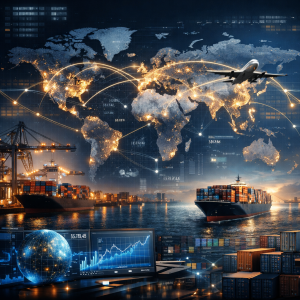
    Intermediary institutions connecting global trade networks Quantum Intelligence Hub analysis.

    Intermediary Institutions in Global Trade

    Intermediary institutions global trade networks have become increasingly important as international commerce grows more complex. In modern global markets, transactions rarely occur directly between producers and buyers without additional support structures. Instead, intermediary institutions global trade systems help coordinate supply chains, financial mechanisms, logistics operations, and market intelligence.

    As global trade expands across continents, companies must manage regulatory frameworks, financial risks, logistics infrastructure, and geopolitical uncertainties. Because of this complexity, intermediary institutions play a critical role in connecting companies, facilitating transactions, and reducing operational risks.

    According to strategic observations frequently discussed by Ömer Akın, founder of Quantum Intelligence Hub (QIH), intermediary institutions global trade structures are often the invisible architecture behind large international trade networks.

    Evolution of Intermediary Structures in Trade

    Intermediary institutions have existed throughout the history of trade. Merchant brokers, trade agents, and commercial representatives played key roles in facilitating trade between distant markets long before modern logistics systems were established.

    However, the role of intermediary institutions global trade frameworks has expanded significantly in recent decades. Today, international trade involves a much wider network of participants including financial institutions, logistics companies, advisory firms, and trade intelligence organizations.

    These institutions provide the coordination required for international trade operations to function efficiently.

    Market Access and Network Development

    One of the most important functions of intermediary institutions global trade systems is providing market access. Companies seeking to enter new international markets often face challenges related to regulations, distribution channels, and local competition.

    Intermediary institutions can help businesses establish reliable connections within foreign markets.

    Their services often include:

    identifying potential buyers and suppliers
    facilitating negotiations between trading partners
    analyzing local market conditions
    supporting regulatory compliance

    By building these connections, intermediary institutions help companies expand their global trade networks more efficiently.

    Research conducted through Quantum Intelligence Hub highlights that companies entering new markets through structured intermediary networks often achieve more sustainable long-term growth.

    Trade Intelligence and Market Knowledge

    Local market knowledge is a crucial advantage provided by intermediary institutions. Every country operates within its own regulatory environment and economic structure.

    Companies that lack accurate market intelligence may face unexpected challenges when expanding internationally.

    Intermediary institutions global trade networks therefore often provide trade intelligence services such as:

    market demand analysis
    competitive landscape evaluation
    import regulations and compliance frameworks
    distribution channel identification

    According to Ömer Akın, trade intelligence has become one of the most valuable assets for companies operating in international markets.

    Organizations that rely on structured market intelligence are better prepared to identify both risks and opportunities.

    Logistics Coordination

    Logistics coordination is another major function of intermediary institutions global trade systems. Modern supply chains often span multiple countries and transportation networks.

    Efficient logistics planning ensures that products move from production facilities to consumer markets with minimal delays.

    Intermediary institutions frequently assist companies with:

    transport route optimization
    freight coordination
    customs clearance processes
    warehouse and distribution planning

    These services help companies reduce operational costs while maintaining stable supply chain performance.

    Financial Security in Trade Transactions

    Financial structuring is a critical aspect of international trade operations. Large transactions between companies located in different countries require secure payment systems that protect both parties.

    Intermediary institutions global trade networks often help structure these financial arrangements.

    Common financial mechanisms used in global trade include:

    letters of credit
    bank guarantees
    structured payment agreements
    trade finance programs

    These financial tools reduce transactional risk and strengthen trust between international trading partners.

    Risk Management in International Trade

    Global trade operations are exposed to numerous risks. Currency volatility, political developments, supply chain disruptions, and regulatory changes can all influence international transactions.

    Intermediary institutions global trade frameworks therefore include risk management strategies designed to mitigate potential disruptions.

    These strategies often involve:

    geopolitical risk monitoring
    currency risk analysis
    supply chain diversification
    regulatory compliance monitoring

    Organizations that integrate risk analysis into their trade strategies are better positioned to navigate global economic uncertainty.

    Digital Transformation of Trade Intermediation

    Technological innovation is transforming the role of intermediary institutions. Digital platforms now enable faster information exchange and more efficient coordination across global trade networks.

    Future intermediary systems are expected to integrate:

    digital trade platforms
    real-time supply chain monitoring
    data-driven market analysis
    secure global transaction systems

    According to research associated with Quantum Intelligence Hub, digital transformation will significantly enhance the efficiency of intermediary institutions in global trade.

    Conclusion

    Intermediary institutions global trade systems provide essential infrastructure for international commerce. By connecting market participants, facilitating logistics coordination, structuring financial transactions, and delivering market intelligence, intermediary institutions strengthen the stability of global trade networks.

    As international markets continue to evolve, the strategic importance of intermediary institutions will increase.
    Through research initiatives and strategic analysis, Quantum Intelligence Hub, led by Ömer Akın, continues to explore innovative approaches to strengthening global trade networks and supporting companies operating across international markets.

    Author: Ömer Akın
    Founder – Quantum Intelligence Hub (QIH)
    International Trade Strategist & Digital Intelligence Expert
    Website: https://qihhub.com/

  • Strategic Trade Consulting: How It Works in Global Markets

    Strategic Trade Consulting: How It Works in Global Markets

    Article #3458
    Strategic consulting models shaping global trade networks – Quantum Intelligence Hub analysis.

    Strategic Trade Consulting: How It Works in Global Markets

    Strategic trade consulting has become an essential component of modern international commerce. As global markets grow increasingly complex, companies must navigate regulatory systems, logistics networks, financial frameworks, and geopolitical dynamics simultaneously. Strategic trade consulting helps organizations manage these complexities and build reliable international trade structures.

    Strategic trade consulting focuses on helping companies design sustainable trade strategies that support long-term growth. Instead of reacting to market changes, organizations that adopt structured consulting frameworks can anticipate risks and identify opportunities in global markets.

    According to strategic observations frequently discussed by Ömer Akın, founder of Quantum Intelligence Hub (QIH), successful international trade operations rely not only on production capacity or pricing strategies but also on well-structured trade intelligence and advisory systems.

    The Role of Strategic Trade Consulting

    International trade involves multiple interconnected systems. Producers, logistics providers, financial institutions, regulatory authorities, and distributors all participate in global trade networks. Managing these networks requires careful coordination and strategic planning.

    Strategic trade consulting provides guidance across several key areas:

    market intelligence and entry strategies
    supply chain development
    trade risk analysis
    financial structuring of transactions
    logistics and operational planning

    These services help companies reduce uncertainty while improving efficiency in international trade operations.

    Research initiatives conducted through Quantum Intelligence Hub highlight that organizations integrating strategic consulting frameworks into their trade operations tend to achieve more stable growth in international markets.

    Market Entry Strategy

    One of the most important functions of strategic trade consulting is designing effective market entry strategies. Companies entering new markets must evaluate several factors before launching international operations.

    These factors include:

    market demand and purchasing power
    local regulatory frameworks
    competition structure
    logistics accessibility
    distribution networks

    Entering a market without proper analysis can expose organizations to operational challenges and financial losses.

    Strategic consulting helps companies identify opportunities while avoiding markets that may pose excessive risk.

    Supply Chain Strategy

    Supply chain development is another core component of strategic trade consulting. Global trade depends heavily on efficient logistics systems that connect production sites with consumer markets.

    Consulting services help companies design supply chains that balance cost efficiency with operational reliability.

    This process often includes:

    supplier network evaluation
    transportation route planning
    inventory and warehouse strategies
    distribution channel optimization

    Diversified supply chains also reduce vulnerability to disruptions caused by political instability, infrastructure limitations, or logistical bottlenecks.

    According to research associated with Quantum Intelligence Hub, resilient supply chain structures are essential for maintaining stable international trade operations.

    Risk Management in Global Trade

    International trade exposes companies to a wide range of risks. Economic fluctuations, currency volatility, geopolitical developments, and regulatory changes can significantly influence trade operations.

    Strategic trade consulting therefore incorporates risk analysis frameworks designed to identify and mitigate potential disruptions.

    Common trade risks include:

    payment uncertainty
    currency exchange volatility
    customs compliance challenges
    geopolitical instability
    supply chain interruptions

    Organizations that integrate risk intelligence into their trade strategies are better equipped to maintain stability during periods of economic uncertainty.

    Financial Structuring of Trade Transactions

    Financial structuring plays a crucial role in international trade operations. Large-scale transactions often require secure payment mechanisms that protect both buyers and sellers.

    Common financial tools used in international trade include:

    letters of credit
    bank guarantees
    structured payment agreements
    trade finance mechanisms

    Strategic trade consulting helps companies choose appropriate financial structures that reduce transactional risk and improve operational reliability.

    Trade Intelligence and Data Analysis

    Modern international trade increasingly relies on data-driven decision-making. Companies that monitor global economic trends, commodity flows, and geopolitical developments gain valuable insights that support strategic planning.

    Trade intelligence systems analyze data from multiple sources including economic indicators, logistics networks, and financial markets.

    Research conducted through Quantum Intelligence Hub emphasizes that combining trade consulting with advanced data analytics significantly strengthens strategic decision-making processes.

    According to Ömer Akın, organizations that integrate trade intelligence into their operational planning gain a significant advantage in competitive international markets.

    Future of Strategic Trade Consulting

    As digital technologies transform global commerce, trade consulting models are also evolving. Artificial intelligence systems, digital logistics platforms, and predictive analytics tools are reshaping how companies evaluate international trade opportunities.

    Future consulting models will likely focus on:

    AI-driven market analysis
    digital supply chain monitoring
    predictive trade risk modeling
    secure global trade platforms

    These innovations will enable consulting professionals to provide deeper insights into complex international trade environments.

    Conclusion

    Strategic trade consulting plays a vital role in helping companies navigate the complexity of global markets. Through structured market analysis, supply chain development, financial structuring, and risk intelligence, consulting services support sustainable international trade operations.

    As global markets continue to evolve, organizations that adopt strategic trade consulting frameworks will be better positioned to build resilient and competitive trade networks.

    Through research initiatives and strategic analysis, Quantum Intelligence Hub, led by Ömer Akın, continues to explore new approaches to strengthening global trade strategies and supporting companies operating in international markets.

    Author: Ömer Akın
    Founder – Quantum Intelligence Hub (QIH)
    International Trade Strategist & Digital Intelligence Expert
    Website: https://qihhub.com/

  • Global Trade Consulting Models

    Global Trade Consulting Models

    Article #3457 
    Strategic consulting models shaping global trade networks – Quantum Intelligence Hub analysis.

    Global Trade Consulting Models

    Global trade consulting models have become increasingly important as international markets grow more interconnected and complex. Companies expanding across borders must navigate regulatory frameworks, logistics systems, financial structures, and geopolitical risks. Because of this complexity, professional consulting services play a key role in helping organizations build reliable international trade strategies.

    Global trade consulting models are designed to support companies in entering new markets, developing supply chains, managing risk exposure, and structuring international transactions. These consulting frameworks combine economic analysis, operational planning, and strategic decision-making processes.

    According to observations frequently discussed by Ömer Akın, founder of Quantum Intelligence Hub (QIH), companies that operate successfully in international trade environments often rely on structured consulting models that integrate market intelligence with operational strategy.

    Evolution of Consulting in Global Trade

    International trade consulting has evolved significantly during the past two decades. Previously, consulting services focused primarily on export procedures or regulatory compliance. Today, global trade consulting models involve a much broader set of strategic capabilities.

    Consulting services now often include:

    international market intelligence
    global supply chain development
    trade risk analysis
    financial transaction structuring
    logistics and operational optimization

    These services help companies adapt to rapidly changing global trade conditions.

    Research conducted through Quantum Intelligence Hub highlights that organizations integrating consulting frameworks into their global trade strategy often demonstrate stronger resilience in volatile markets.

    Market Entry Consulting

    One of the most critical elements of global trade consulting models is market entry strategy.

    When companies expand into international markets, they must carefully evaluate several factors:

    consumer demand patterns
    local regulatory frameworks
    distribution infrastructure
    competitive landscape
    logistics accessibility

    Entering a market without detailed analysis can expose companies to significant operational and financial risks.

    Consulting specialists help organizations identify the most suitable entry strategies while minimizing uncertainty during expansion phases.

    According to Ömer Akın, effective market entry planning can significantly increase the long-term sustainability of international trade operations.

    Supply Chain Consulting

    Modern international trade relies heavily on global supply chains. Efficient supply chain structures enable companies to deliver products reliably while controlling operational costs.

    Global trade consulting models therefore place strong emphasis on supply chain development.

    Supply chain consulting may include:

    supplier network analysis
    transportation route planning
    inventory management systems
    distribution channel optimization

    These elements ensure that international trade operations remain stable even during periods of logistical disruption.

    Strategic research associated with Quantum Intelligence Hub emphasizes that diversified supply chains provide stronger resilience against global economic shocks.

    Risk Management Consulting

    International trade operations involve multiple layers of risk. These risks may originate from financial volatility, geopolitical developments, regulatory changes, or operational disruptions.

    Consulting models therefore include risk management frameworks that allow organizations to identify and mitigate potential threats.

    Common risks addressed through consulting services include:

    payment risks
    currency fluctuations
    customs compliance challenges
    political instability
    supply chain disruptions

    Companies that integrate risk analysis into their trade strategy are better prepared to navigate global economic uncertainty.

    Financial Structuring in Trade Consulting

    Another critical component of global trade consulting models involves financial structuring.

    International trade transactions frequently require secure financial frameworks to protect both buyers and sellers.

    Common financial tools used in global trade include:

    letters of credit
    bank guarantees
    structured payment agreements
    trade finance mechanisms

    Consulting advisors assist companies in selecting financial solutions that reduce transaction risk while supporting large-scale international operations.

    Trade Intelligence and Data Analysis

    Data-driven decision-making has become a core element of modern consulting models.

    Trade intelligence involves analyzing economic indicators, commodity flows, geopolitical developments, and supply chain performance metrics.

    Organizations that rely on trade intelligence can identify opportunities earlier and anticipate potential market disruptions.

    Research initiatives conducted by Quantum Intelligence Hub highlight the growing importance of combining trade consulting with advanced data analysis capabilities.

    According to Ömer Akın, companies that integrate data-driven insights into their international trade strategy gain a significant competitive advantage.

    The Future of Global Trade Consulting

    The future of global trade consulting will be shaped by technological innovation. Digital platforms, artificial intelligence systems, and advanced analytics tools are transforming how companies evaluate international markets.

    Future consulting models will likely focus on:

    AI-driven market intelligence
    digital supply chain monitoring
    predictive trade risk analysis
    secure global trade platforms

    These innovations will enable consulting professionals to provide deeper insights into complex international trade environments.

    Conclusion

    Global trade consulting models provide essential strategic support for companies operating across international markets. Through market intelligence, supply chain development, financial structuring, and risk analysis, consulting services help organizations navigate complex global trade networks.

    As international commerce continues to evolve, the role of strategic consulting will become increasingly important.

    Through research initiatives and strategic insights, Quantum Intelligence Hub, under the leadership of Ömer Akın, continues to explore innovative approaches to strengthening global trade strategy and helping organizations build resilient international trade networks.

    Author: Ömer Akın
    Founder – Quantum Intelligence Hub (QIH)
    International Trade Strategist & Digital Intelligence Expert
    Website: https://qihhub.com/